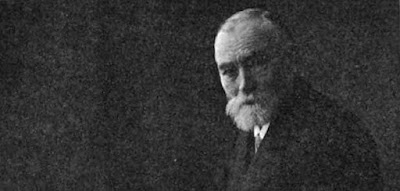
Showing posts with label Gottlob Frege. Show all posts

Wednesday, February 23, 2022

More on culture and language

I recently set out some of my basic beliefs and assumptions about what there is and about what makes a person.

"Biology and culture. Culture and biology. That’s not all there is, but – with the inorganic world within which biological organisms evolved and within which they exist – that’s enough to make a human being..."

And, in a recent podcast, I talked about Gottlob Frege's beliefs and assumptions about life and language, views which I endorse to a large extent. Frege saw human thought and language in fundamentally organic and holistic terms.


I am adding here a few general thoughts on culture and language. My sense is that these various fragments are compatible with one another and form (potentially at least) a more-or-less coherent whole.

Language is probably the most basic cultural element for two reasons: it bridges biology and culture in ways that other cultural elements do not; and it is the foundation or at least a sine qua non for the development of many other cultural forms and practices, from religion and politics to mathematics.

Culture is undoubtedly real but a culture is impossible to define in a precise way. The same applies to language and languages. Just as each of us deploys a unique linguistic system (idiolect) which is different in various ways – scope and details of lexicon, aspects of syntax, pronunciation, etc. – from the linguistic systems deployed by others within our language group, so each of us embodies a unique cultural mix.

This idea obviously relates to the idea of individualism and, I think, justifies taking individualism seriously as a potential way of dealing with social problems related to various kinds of identity politics and stereotyping.

Degrees of overlap vary between individuals but, because cultural elements are so diverse, there is no single measure of commonality. Some cultural elements are easily isolated and compared but most are not.

Take language. Though the idiolect notion is (in my opinion) central to any truly scientific approach to language, for practical purposes it is useful – necessary in fact – to distinguish between languages or dialects. This inevitably involves abstraction and simplification – but then so does most of our ordinary, day-to-day thinking.

Religion is another fairly clearly identifiable cultural element, at least in the sense that the churches and sects and religious movements of the modern world can be defined and demarcated in both social and doctrinal terms. Complications arise, however, when you start to look at how participating individuals envisage and justify their participation. Congregations may be gathered together physically, but each individual will have a unique perspective on what they are doing and why.

I am conceding that identifying and drawing cultural distinctions within certain defined areas is not only possible but inevitable and necessary. But defining and drawing these distinctions is difficult to do in a rigorous way. And, if one is talking about a culture in a general sense, that task becomes well-nigh impossible.

The notion of a national culture is particularly problematic. Where there can be said to be such a thing, it is of necessity imposed and artificial – in contrast to regional cultures, for example, which are shaped over long periods of time by local conditions and practices.

Generally, it makes more sense to talk of national myths and ideologies rather than national cultures, I think. Perhaps if one is looking at a fully-fledged totalitarian state in which the natural course of cultural history has been totally blocked or perverted by a central authority, leaving the population with no other culture than that which has been imposed upon them by their ideologically-driven overlords, you could talk about a national culture. But, even in such cases, pockets of resistance will inevitably arise, complicating the picture.

Ideology and political myth, I am saying, need to be distinguished from (and are always in tension with) the more spontaneous and organic forms of thought and action which derive from the activities of small groups, families and individuals pursuing their personal goals.

Friday, January 28, 2022

Individualism and cultural embeddedness

I talk here about my general goal in this series of podcasts of presenting and defending a form of individualism which takes seriously our cultural embeddedness, noting that universal political prescriptions – to the extent that they can be applied at all – are rarely successful. Reference is made to the surprising origins of neo-liberalism in Europe in the 1930s. The European neo-liberals were keen to distance themselves from earlier, laissez-faire approaches to economics and emphasized the importance of cultural factors.

Tags: neo-liberalism, laissez-faire, Chicago School, Milton Friedman, Louis Rougier, Wilhelm Röpke, groupthink, cultural embeddedness, language, Karl Vossler, close reading, science, Gottlob Frege.
  

Wednesday, January 6, 2016

Frege on natural language

There was a discussion recently at The Electric Agora about Gottlob Frege's famous paper, 'On sense and reference', which brought home to me just how little progress has been made in the last century or so on this and other topics in an area often designated as the philosophy of language.

In fact, rereading Frege's piece, I was greatly impressed not only by its seriousness and intellectual fecundity but also by the careful and respectful way Frege – who was basically a philosophically oriented mathematician and logician – dealt with issues of natural language.

He did not draw easy conclusions but was often content simply to sketch out the semantic complexities involved in certain kinds of syntactic contexts, for example in relation to reported speech or subordinate clauses involving the subjunctive mood.

What has always been clear to me (and which this recent discussion only confirms and underscores) is that aspects of Frege's work have been appropriated and incorporated into a (philosophical) project and a narrative which is quite alien to what Frege – who identified as a man of science – saw himself to be doing.

The comment thread is interesting for a number of reasons but particularly perhaps for the contribution towards the end by someone who has recently translated some early work by Frege and who suggests – as I am suggesting here – that Frege would have been quite out of sympathy with most late-20th century philosophers of language, even those who claim him as a precursor.

I don't want to suggest that the science/non-science distinction is clearcut. It's not. For one thing, there are obviously huge differences between empirical work in different areas (between empirical work in physics and the study of natural language, for example); and also an important distinction between empirical work in general and the building of mathematical or logical or conceptual structures which may be intended (as Frege's were) for basically scientific applications.

But clearly certain kinds of discourse, such as aesthetic, moral and ideological discourse, while they may draw on scientific knowledge to a greater or lesser extent, are not scientific – and (contingent of course on one's conception of philosophy) not necessarily 'philosophical' either.

My first comment on the thread (which I quote here in a modified form) touched on this point.

[Quoting another commenter] "... So it seems Frege is really excluding discussions that clarify or debate sense [as distinct from reference] ... from logical analysis. (This is certainly in keeping with the agenda of Logical Positivism that followed after, which held that topics in aesthetics, religion, politics, etc., were philosophically moot.)"

Yes, this is a very important point. The references to Homer's Odyssey etc. in the Frege's paper seem to confirm what you are saying. Frege obviously respected poetry and fiction etc. but took discourse relating to these things, other hypotheticals and also political rhetoric as being in a very different category or set of categories from the kind of discourse and inquiry (scientific, philosophical) in which he saw himself to be engaged...

Frege's attitude to signs which have a sense but not a reference, which of course include not only the names of fictional characters like Odysseus but also many other kinds of expression and which he tentatively refers to as 'representations', is ambivalent. He accepts that they are an essential element of natural language-based communication, but sees them as operating beyond the scope of science and the sort of logical enquiry he is interested in, except in the sense that the latter may provide certain salutary lessons.

In the vast majority of cases the use of such 'representations' is perfectly fine, but sometimes problems can arise which the logician may be able to diagnose or at least see in a perspicuous way. Frege warns, for example, about political contexts in which expressions like "the will of the people" – which have a sense but not a reference (or at least not any clear or agreed one) – are used rhetorically for purposes of social or political manipulation.

Sunday, July 8, 2012

How we ought to think

'One of the great pleasures of the philosopher's life,' wrote Jim Hankinson in The Bluffer's Guide to Philosophy, 'is being able to tell everyone (and not just children and dogs) what they ought to do. This is Ethics.'

On this reckoning, logic should afford even greater pleasure to its practitioners than ethics does insofar as it purports - at least on some accounts - to tell everyone how they ought to think. For example, consider this (from a text book for undergraduates): 'Logic is sometimes said to be the science of reasoning, but that assertion is somewhat misleading. Logic is not the empirical investigation of people's reasoning processes or the products of such processes. If it can be called a science at all, it is a normative science - it tells us what we ought to do, not what we do do.'

Or, as Gottlob Frege put it: 'the laws of logic are ... the most general laws, which prescribe universally the way in which one ought to think if one is to think at all.' (The Basic Laws of Arithmetic)

Frege, in fact, was something of a proto-fascist, and the above statement could be interpreted as having an authoritarian, even totalitarian, tenor. It could also be interpreted simply as an honest statement of the constraints of thought, reflecting Frege's noble goal of defining the bedrock of human reasoning.

It's no surprise that most attempts to articulate logic's normative role run into trouble. For what authority can the logician appeal to?

Formal logical systems are often seen as part of an attempt to systematize thinking, to improve (as it were) on ordinary thinking and the ordinary language on which it depends. And it is certainly true that ordinary language often deceives us and obscures the underlying logic (or structure) of an argument. Translating an argument into a formal language can reduce ambiguity, but those who have sought through the study of formal logical systems to illuminate the laws of thought or their foundations have been disappointed. Doubts surround not only the putative authority of a logical system but the very meaning of its symbols.

Technically, the meaning of what Rudolf Carnap called the fundamental mathematico-logical symbols (now usually called logical constants) derives from the explicit rules we lay down for their use, but in fact the question of their meaning remains obscure. One thing is clear: the whole exercise is paradoxically dependent on a prior understanding of the basic logical operations. Ordinary language use is also predicated on such an understanding: anyone lacking it would not be able to use language in anything like a normal way.

The work of Frege and his successors led, of course, to the development of digital computers in the mid-twentieth century, and in this sense it was spectacularly fruitful and successful. But it has not really led to a new understanding of human reasoning or established clear guidelines - as Frege hoped - for how we ought to think.

In fact, the attempt to create formal systems which can do what natural language can do has led to a renewed appreciation of the complexity, power, elegance and logical depth of the latter. Wittgenstein was right to warn against thinking of our everyday language as only approximating to something better, to some ideal language or calculus.

We need formal systems for dealing with mathematics and science and technology, but, as far as the fundamentals of logic are concerned, it's all there - implicitly at least - in the language of a five-year-old child.

Friday, May 25, 2012

Apparitions

In David Berlinski's world, the great mathematicians and logicians of times past are alive and well, and make regular appearances in the here and now. Leibniz comes late one night to sit by Berlinski's desk and discuss his curious notion of an encyclopedia of human concepts, "his lush old-fashioned wig proving irresistible to my cats, who have come creeping from their tower to bat at it."*

And Gottlob Frege [1848-1925] somewhat surprisingly team-taught logic with Berlinski at an unnamed California college at an unspecified point of the later twentieth century:


Our classes were always well attended because logic was a prerequisite for an engineering degree, and they were, I must say, well received, Frege and I both receiving excellent if somewhat innocent standardized student evaluations, any number of students somehow saying the same thing, that while Mr. Berlinski should learn to match his ties and suits, Mr. Frege is very nice. No wonder they never complained about his clothes. Frege would dress severely, no matter the sunshine, which even in February seemed to light up every corner of the campus, wearing the same black frock coat and batwing collar that, no doubt, he had worn in Germany. You must imagine the man at the blackboard, the thick German chalk in his fingers, his back always toward our students and the logical symbols going up and down the board, the steps separated, when necessary, by heavily drawn lines.


Is Berlinski romanticizing the intellectual figures of the past in his literary fantasies? No doubt he is. But then perhaps Frege and other pioneers of logic were indeed special, and alive to the wider implications of their work in a way most contemporary logicians are not. This may be because they were wrestling with big ideas rather than merely technical elaborations of those ideas. Peter Smith has recently made the point that today's more 'advanced' logic is less philosophically interesting than the more basic stuff (in effect the work of the great pioneers).

Berlinski was taught logic by the legendary Alonzo Church, and so has in my mind a certain reflected glory, a certain aura, as he is a link to a great age of human thought. Like an old colleague and friend of mine who was taught by Willard Van Orman Quine, a fact which - quite irrationally - made me very forgiving of his many personal failings.**

One last quote...


Sometime in the fall after the spring in which Frege and I had taught logic together in California, my great friend, the logician DG took his life. He had loved someone a great deal and for a very long time, and when it was over he had only logic left and logic was not enough. He was cremated in Colma at the insistence of his wife; I watched as the conveyor belt took his coffin toward the winking red lights; there was a roar from far away as the gas-fired jets ignited, and two hours later, I was given a plain wooden box with his ashes.

I took the box with me to one of those sparse California hills, which are covered with chaparral and a few scrub oaks standing in copses.

I was about to scatter the ashes when I noticed that Frege had joined me. He was dressed, as always, in black. I opened the box and let the salt-smelling wind carry the ashes far away.

Frege looked into the middle distance. I thought he would remain silent.

"I always come for my own," he said, just before vanishing himself, leaving me alone with the smell of wild sage.


* All quotations are from Berlinski's The Advent of the Algorithm (Harcourt 2001).

** In truth, he is a good and intelligent man. (Hello John!)

Friday, May 11, 2012

The gnome of logic

David Berlinski has written with gloriously overabundant and rich rhetorical flair on the history of mathematics and logic. Here he introduces Gottlob Frege, whom he calls "the gnome of logic":

His life was bleak. Frege was born in 1848 in Wismar, which lies in the province of Mecklenberg-Schwerin. Bleak enough. This is northern Germany, the land facing the Baltic Sea. Bleaker still. It is a countryside of dark and gloomy forests, hags and elves and goblins and toadish-looking men behind the sombre trees. At night, the horned owls hoot and black-footed wolves trot restlessly along the forest paths and hunchbacks gather in darkened glens to play the clarinet.

Frege spent his entire academic career at the University of Jena, trudging like Peano in Italy up the obligatory steps of the academic ladder: a Privatdozant in 1871, and so authorized to accept students without pay, an ausserordentlicher Professor in 1879, a Professor in 1896, and thereafter a Herr Professor, the open-voweled Herr followed in conversation by the three even beats of Professor.

He was married for many years - happily, so far as I know - die gnädige Frau Frege dying along with Europe during the course of the First World War, and so darkening a personality that was already dark, lonely, crabbed, solitary, and withdrawn.

And he seems to have been - in plain fact, he was - a ferocious anti-Semite, seeing in Germany's sad, doomed, cultured German Jews an alien and unwanted presence, and, no doubt, regarding the turbulent wave of eastern European Jewry, which had washed over Germany early in the century and with outstandingly bad judgement come to rest in Leipzig or Dresden or in Weimar itself, with feelings akin to frank revulsion. Disliking Jews, Frege disliked Catholics as well, the ink of his indignation ecumenical in its nature. He was deeply devoted to the German monarchy, its preposterous and dangerous kaiser receiving from Frege the respectful sentiments that he had nowhere else to discharge. With the exceptions of Bertrand Russell, Ludwig Wittgenstein, and, to a certain extent, Edmund Husserl - a not inconsiderable trio, of course - contemporaries could not fathom his work. It was ignored when it appeared, and if philosophers and logicians now agree that Frege was the greatest of mathematical logicians, if only because he was the first, their encomiums came too late to afford him solace. He died in 1925.

And he died alone.


[From The Advent of the Algorithm (Harcourt 2001), pp. 48-49.]