Showing posts with label science. Show all posts

Wednesday, May 7, 2025

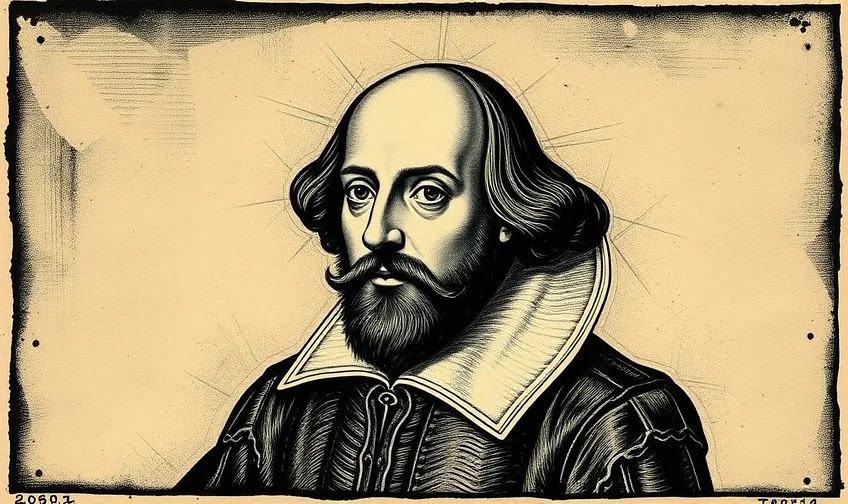
Who wrote the works of Shakespeare?


The Shakespeare authorship question was not a topic I had ever taken a special interest in. As a student I simply accepted the conventional view. Over time, however, I realized that a rigorous, evidence-based case for the glover’s son from Stratford-upon-Avon as author of the works in question had never, in fact, been made and that there were strong reasons to believe that the name associated with these works was a pseudonym and was generally understood to be such by those in the know at the time.

One strong reason to doubt that the man from Stratford wrote these very significant works is the complete lack of a literary paper trail generated during his lifetime, documentary sources (letters, official documents, etc.) which attest to his having been a writer. There is plenty of such evidence for other writers of the time, even for relatively minor figures.

Lately I have been having another look at the Shakespeare authorship debate and was surprised how polarized and rancorous it has become. I will, however, refrain from speculating on the causes for this and simply set out my current position as clearly and concisely as I can, touching on some broader implications of the debate.

First of all, it’s worth noting that the literary-academic mainstream position has shifted. It is now generally acknowledged that significant parts of the Shakespearean dramatic corpus were written by other authors. Co-authorship, whether through actual collaboration or through revision or supplementation of plays by other hands, was common practice at the time and the traditional view of there being a single author of the plays in question is simply no longer tenable. The question (for the plays at least) is now one of primary or principal — rather than sole — authorship.

If I were to delve more deeply into the authorship question, my focus would probably be the poems rather than the plays. For one thing, single authorship for poems is the norm, but there are other reasons. Crucially, it was the publication of the narrative poems “Venus and Adonis” (in 1593) and “The Rape of Lucrece” (in 1594) which first brought the name William Shakespeare to public prominence in a literary context: both publications bore a clear authorial designation and were extremely popular. (“Lucrece”, by the way, is a richer and more accomplished work than “Venus and Adonis”; the latter I find forced, artificial and rather tedious — though interesting from a psychological and moral point of view.)

In my view, doubts may be raised about the conventional view that the man from Stratford wrote the Shakespearean oeuvre purely on the basis of his station in life and the style and content of the poems which are clearly the work of someone steeped in classical literature and Renaissance art (especially painting).

There are indications also of an acute political awareness. As I see it, much of the poetry and the best of the plays are the work of a disillusioned insider attuned to and caught up in the tides and currents of national politics rather than that of an upwardly-mobile provincial with very little education.

With respect to politics, it’s well to bear in mind that politics and religion were intimately intertwined at the time and (given the upheavals of the Reformation) necessarily transcended national borders. The years leading up to Queen Elizabeth’s death (and the all-important succession) were fraught with social and religious tensions, fears of invasion and civil war, widespread censorship and ruthless political repression.

As I have come to see it, many seemingly obscure or puzzling passages in Shakespeare’s works can be seen to represent the bubbling up of a potent political subtext which would have been clear to informed contemporary readers or audiences. In repressive and dangerous times, a large degree of obliqueness is required. For example, the ploy of setting stories in other times and places is a time-honoured way for writers to provide a certain amount of cover and space for dealing with hot political topics.

The lack of any solid evidence based on contemporary sources for the traditional authorship theory calls at the very least for a degree of skepticism regarding the standard theory but the sorts of considerations I have mentioned above have led me beyond a mild skepticism to the conviction — still largely intuitive but bolstered by a certain amount of research and reading — that the man from Stratford-upon-Avon authored neither the poems nor the plays attributed to William Shakespeare.

The matter will not be finally settled, of course, until we know more about who did write these works, until such time as compelling cases connecting a particular author — or set of authors — to large parts of the canon are made, with each such case incorporating the latest historical findings as well as rigorous textual and linguistic analysis. Stylometric analysis has been used clumsily or misapplied in the past but (mainly due to its usefulness in the area of counter-terrorism and other forensic applications) the discipline of stylometry has attracted funding and advanced significantly in recent years. Quantitative, corpus-based approaches, used judiciously and in conjunction with traditional forms of philological and stylistic analysis, have already changed the research landscape and will no doubt lead to more progress on the Shakespeare authorship front, if not to definitive conclusions.

In the broad scheme of things, historical authorship questions are of limited interest and importance but the rise and persistence of what certainly was and continues to look very much like a cult surrounding the Stratford man has serious implications for how certain groups and institutions will be perceived and judged. If things play out as I think they will, hard questions would rightly be asked about the state and status of our literary and scholarly institutions.

Bear in mind that English literature was not taught in universities or seen as forming the basis of a distinct scholarly discipline until the late 19th century. And when it was eventually introduced to the universities it battled to gain respect. Obviously it would be quite damning for the literary-academic establishment and for the institutional framework which it has created over the last century or so if these groups and institutions were seen to have embraced, promoted and perpetuated a totally false narrative about the creation of some of the most important literary works of all time.

Worse, this narrative (at least in terms of its core elements) has until now been treated within the literary-academic world as sacrosanct and not to be questioned. How unscientific is that?

Of course, many of today’s literary scholars see their field — and the humanities more generally — not only as not being continuous with science but even as being in direct opposition to science and scientific ways of thinking and seeing the world. This is a profound mistake in my opinion.

Moral, aesthetic and political judgements are crucially important and are not amenable to purely scientific methods of assessment. But civilization is built on a division of labour, and the various professions are trusted to develop and deploy expertise in specific areas and to be a source of reliable knowledge for the broader population. How else can charlatans and their false claims be effectively exposed?

Myths and sacrosanct narratives are not just top-down phenomena, of course, being sustained and nourished by complex social dynamics involving, amongst other things, politics (broadly construed), in-groups and out-groups, pecking orders and personal egos.

I recall to my shame, soon after graduating with an M.A. in English, pompously dismissing the Shakespeare-authorship doubts of a non-literary friend. In effect, I took his comments as an opportunity to assert my (relative) authority and status. A far more productive — and mature — response would have been simply to try to draw him out on what had caused him to reject the traditional story.

[This piece first appeared last month on my Substack site (markenglish.substack.com). You're welcome to visit and, if you care to, to subscribe in order to receive future posts (by email or alternatively on the Substack app) as they appear. Subscriptions are free and it's easy to unsubscribe.]

Sunday, April 3, 2022

Distorting history

Bharath Vallabha used to be a regular contributor to The Electric Agora. He returned recently with a piece about how, in his view, some of the central and most polarizing debates of post-World War 2 academic philosophy were the product of a misreading of intellectual history. Both Gilbert Ryle and Richard Rorty were extremely influential and both gave a false picture of Descartes' thought and the Cartesian tradition more generally.

Here is Bharath on Rorty and Ryle and how his own views have changed:

[Rorty] went from being a Princeton philosophy professor and president of the APA to basically decamping to literature departments. He was right about problems with the direction of analytic philosophy, but it was a mistake to connect that criticism to Descartes et al.. Philosophy and the Mirror of Nature is no more a careful study of Descartes than Ryle’s Concept of Mind was... I think Rorty was reading a lot of what was wrong with analytic philosophy back into early modern philosophers. This kind of reading back led to Rorty being polarizing, because he was lumping together 300 years of thinkers in a way that divorced them from their historical context.

To be honest this is a new thought for me. For longest time I was on the side of Rorty and Ryle against early modern philosophy of mind and as it carried over into analytic philosophy... Rorty’s book says more about Rorty’s struggle with professional philosophy than it does about Descartes and Kant. It seems strange to me now that there is some special conception of mind common to Descartes to Nagel even given the vast differences in context of what being a philosopher is between them. My thought is if we let go of this kind of generalizing over centuries to tell who the good guys are and who the bad guys, would be easier to listen to each other – in ways for example Rorty and his Princeton colleagues couldn’t do. And in ways current traditionalists and social justice warriors now can’t, because both are wedded to historical generalizations.

On binary thinking:

Resentationalism versus Pragmatism, and fitting historical figures into those categories, forces a binary choice at every turn, in the present and in the reading of the past. There is then no way to rethink the terms of the debate. However, if one sees historical figures with new eyes and with greater openness to historical context, new, more productive conversations are possible.

I agree with this entirely. Like Bharath, I favour more historically-oriented approaches. And I too have only recently come to realize the extent to which Ryle was misrepresenting Descartes. Rorty distorted history also. He was worse than Ryle, in my opinion, because he let politics intrude into his professional work, and also because of his anti-science bias.

Despite his criticisms, Bharath made it clear that he values the writings of Rorty and Ryle (if not the work of their followers). I am less positive. Though I give credit to both Ryle and Rorty for their stylistic power and the thought-provoking nature of their best work, my reservations outweigh my sympathies.

I share Ryle's secular outlook and his commitment to an apolitical approach to academic work. But, in my opinion, any attempt to carve out a sacrosanct space, distinct from the sciences, for an academic philosophy of mind is fatally flawed.

In terms of general outlook, however, I am definitely further away from Rorty than I am from Ryle. I am close to the former on one matter only, as far as I can tell. I am sympathetic to his disillusionment with and drift away from academic philosophy.

Rorty's roots were in literature (his father was a poet) and I understand that he took comfort in his final illness reading the likes of Swinburne rather than philosophical works. (Martin Heidegger – another master of historical distortion – followed a similar trajectory.)

Friday, January 28, 2022

Individualism and cultural embeddedness

I talk here about my general goal in this series of podcasts of presenting and defending a form of individualism which takes seriously our cultural embeddedness, noting that universal political prescriptions – to the extent that they can be applied at all – are rarely successful. Reference is made to the surprising origins of neo-liberalism in Europe in the 1930s. The European neo-liberals were keen to distance themselves from earlier, laissez-faire approaches to economics and emphasized the importance of cultural factors.

Tags: neo-liberalism, laissez-faire, Chicago School, Milton Friedman, Louis Rougier, Wilhelm Röpke, groupthink, cultural embeddedness, language, Karl Vossler, close reading, science, Gottlob Frege.
  

Saturday, May 23, 2020

When is a discipline not a discipline?


Disruptions to business as usual, such as we have been experiencing in the wake of the coronavirus pandemic, inevitably raise questions regarding which activities or institutions are essential or important for a good or fulfilling life, and which may be happily dispensed with. Answers to such questions are often very personal, of course.

My focus here is on activities associated with education and research. A strong case can be made that – especially within the arts and humanities, but also within the social sciences – skepticusm about the possibility of objective knowledge has been taken to extremes and, in fact, weaponized to protect entrenched interests. In view of this, I thought it useful to articulate a firmly knowledge-based perspective on education and research.

I am always a bit uneasy talking about academic disciplines and discipline boundaries. For one thing, it feels a bit redundant. Disciplines are what they are, and practitioners and observers make their own judgments about where to draw boundaries and about the worth or value of particular fields. Nonetheless, judgments must be made. And their significance is all the greater in times of change, in times of crisis: in times like these, in fact, when the future is in the balance and business as usual is just no longer an option.

I see our educational and cultural infrastructure as having lost its legitimacy and being in desperate need of reshaping and radical reform. The early years of education are particularly crucial but universities find themselves having to do remedial work and teach basic skills. I won't go into detail. Most people know the situation and everyone has their own ideas about possible solutions.

What is clear is that much more needs to be done in the earlier years, both in terms of imparting practical skills and knowledge, and in terms of broader goals associated with education’s socializing – or civilizing – function. It is beyond dispute that the K-12 system in America and many equivalent systems elsewhere have been failing badly for years.

Universities are also struggling and the value of higher education is increasingly being called into question. College enrolments in America have declined by more than 10 percent over the last eight years. Last month NPR reported that the current crisis may be an existential one for many colleges. But what is being taught in many of these colleges may be part of the problem.

All intellectual disciplines – be they scientific or scholarly – can be seen as adding to a shared knowledge base and having knowledge as their reason for being. Many other possible raisons d'être for academic and intellectual disciplines could be given, of course. And are. My point is just that I don't find other justifications for classing activities as serious intellectual disciplines particularly convincing. The fields in question may well be intellectual, but where is the theoretical rigor, where is the discipline, if anything goes on the knowledge front? What is the point of theory if it is not a means of building or articulating or facilitating the acquisition of knowledge?

Of course, high levels of rigor and discipline are often in evidence in activities which involve various kinds of practical knowledge. Such activities may or may not be associated with a body of theory. To the extent that they are, they will depend on formal educational structures.

Explicit claims about the world always need to be assessed regarding their plausibility. This need not be – and normally isn't – done in a rigorous or systematic way. In day-to-day life and politics, all kinds of claims are made and assessed on the run within dynamic social contexts. I am not complaining about this.

What's more, in ordinary life the truth of a claim is often less important than its social function, its role in modifying behavior for example. Or think of politeness phenomena like white lies which are primarily designed to spare the feelings of others. Courtesy and truth don't go together well!

Within the strict confines of intellectual and technical disciplines, however, the truth or otherwise of the claims being made or assessed is (or should be) quite central. Unfortunately many academic disciplines – especially within the humanities – have lost sight of this simple and obvious fact and have become, wholly or in part, self-perpetuating talking shops, jargon-ridden and superfluous extensions of the jousting and jostling of ordinary social and professional life.


[This is a slightly edited and abridged version of a piece which first appeared at The Electric Agora.]

Wednesday, January 15, 2020

Speaking of time


A confusing and (arguably) confused article about time which appeared late last year at The Electric Agora prompted me to set out a few of my own thoughts on perceptions of time and time and language.

There is the physics of time (that is, time as it is dealt with and understood in the context of physics) and time as we experience it. Natural languages provide subtle means for dealing with the latter.

There is no absolute dichotomy here, however. The physics of time cannot be totally divorced from our experience of time, though the connections may be convoluted. All our experiences of time involve the mechanisms of memory and various systems within the body which keep track of time at various scales.

Physics is an empirical discipline, one among many. I am committed to a consilient view of the sciences and intellectual inquiry more generally. Discipline boundaries should not be seen as rigid. They are largely matters of convenience, practicality and organization and a process or phenomenon can often be approached from various directions and dealt with in different – and complementary – ways.

We experience periods when time seems to pass more quickly or slowly than normal. The former tends to be associated with pleasant or absorbing activities and the latter with pain or boredom. And we have the sense that time in general and, especially, longer periods of time pass more quickly as we age. These are, and are clearly understood to be, subjective phenomena.

Moreover, fast and slow are intrinsically relational ideas. If last year seemed to rush by, it is only by comparison with how we remember previous years. And a slow motion or time-lapse photography-based film can only be identified as such by contrast to the pace of events in the real world with which we are familiar.

There is another sense in which time can be said to go faster or slower. Different kinds of nervous and perceptual systems run on different time scales. For example, we find flies and many small animals very hard to catch. Their perceptual and motor systems run faster than ours. It is as if to them we are lumbering giants living in a slow-motion world.

There are some important facts about time which were discovered in the 20th century which are very puzzling but which can be known and accepted by anyone, including those without any training in theoretical physics. For example, we know by experiment that synchronized clocks do not stay synchronized under certain circumstances (relating to motion and exposure to gravitational fields). If two clocks are synchronized at a given place and one of them is sent off on a journey in space and then brought back, the space-travelling clock will register significantly less time having passed than the other clock. And a clock exposed to a stronger gravitational field than another clock with which it has been synchronized will register less time having passed than the other clock when the clocks are reunited.

These facts have important implications for how we think about time. This becomes clear if you substitute living human bodies for mechanical clocks. An astronaut who travels on a long space journey and returns to earth will be younger than his twin who remained at home.

A natural interpretation of the end result is that time (from the point of view of the stay-at-home) has passed more slowly for the astronaut, and (from the point of view of the astronaut) has passed more quickly for his twin. Such claims need to be clearly distinguished from claims about the other person’s experience. Quite obviously, the claims do not relate to the experience of time passing or the experience of aging. They represent perspectival views and constitute a natural gloss or commentary on the basic facts.

Has the astronaut travelled to the future? In a real sense, he has. But, again, there is scope for confusion and misunderstanding here.

Of course, there is often a tension between scientific and commonsense perspectives. The latter are inevitably shaped by language as well as by other inherited modes of thought. Applying a language which evolved to deal with certain limited sets of possibilities to situations which involve contingencies which transcend these limits inevitably poses problems. And these problems are all the greater if we are dealing not just with incremental technological developments but with ideas, circumstances and possibilities which are radically new and which lack analogues in the world within which language originally evolved.

I am not questioning the adequacy of ordinary language for ordinary communication nor its adaptability and flexibility in the face of technological change and development. When it comes to the physical and social world as we normally encounter it – and to our perceptions of time – language works just fine.

There is great variation in the way different languages deal with time. Some languages are tenseless (e.g. Burmese, Vietnamese, Thai, Malay and most varieties of Chinese) and have other ways of dealing with time but, in most languages, the grammatical category of tense plays a central role. The category of tense interacts with aspect and mood in complex ways which vary from language to language, allowing precise, time-related distinctions to be made. The complexity and sophistication of the grammatical structures involved testify to the importance that a command of the subtleties of time (and perspectives on time) have played in human thought and interaction over many millennia.

Tense is relational. The time of the event or state denoted by the verb is indicated in relation to some other temporal reference point or points. In the case of absolute tense, the temporal reference point is the “now” of the speaker, the moment of utterance. (“It was raining.” “It has been raining.” “It is raining.” “It will rain.”)

More complicated cases involve absolute-relative tense. This involves reference to a time which is related to a temporal reference point which is not the moment of utterance; this temporal reference point is, in turn, related to the moment of utterance. So you are in effect juggling three points or periods in time. The main kinds of absolute-relative tense are future perfect, past perfect, future-in-future and future-in-past.

The future perfect, for example, involves reference to a time located before a contextually determined temporal reference point that must be located in the future relative to the moment of utterance. (“He will no doubt have forgotten about it by the morning.”)

And the past perfect involves a time in the past relative to a reference point which is itself in the past relative to the moment of utterance. (“I had hoped to find her at home but she wasn't there.”)

The inferences involved in conditional sentences are often time based. Past perfect tense is often involved. (“Had he been here when you passed, you would have seen him.”) Or the future perfect. (“If she completes the task by tomorrow afternoon, she will have proven herself.”) Note that a particular view or “map” of the structure of past, present and future is implicit in these forms of expression, and the logic of the sentences rests upon a shared understanding of this time “map”.

In addition to these and similar grammatical structures, there are also many common idiomatic expressions which pertain to how we experience time. Such expressions are almost invariably metaphorical. Crucially, they are generally taken as such, and are not seen as literal or metaphysical or proto-scientific claims. The same can be said for many common expressions about the natural world which, taken literally, are in conflict with a scientific understanding but which, used in the normal way, are perfectly acceptable. (Sun rising, wind blowing, etc..)

Time may not literally “pass” or “flow”, but these and similar expressions capture something of our experience of inexorable change.

Tuesday, December 24, 2019

Language and thought: some metaphysically skeptical reflections


Conceptual frameworks are always provisional

The logical positivists took a very hard anti-metaphysical line. They were right, in my view, to see traditional metaphysics as being futile and pointless. The essential problem with metaphysics is epistemic. How (given a basically scientific view of the world) can purely metaphysical statements be justified? Rudolf Carnap and most of his Vienna Circle colleagues didn’t think they could and consequently saw no place for metaphysics as a serious discipline.

There is no denying that fundamental, foundational and relational questions arise naturally in the course of scientific and other forms of rigorous inquiry. These kinds of questions are not only worthwhile, they are necessary and inescapable, and to call them philosophical or (in certain cases) metaphysical is not out of line with common usage. Problems arise, however, when philosophical or metaphysical thinking becomes detached from empirical reality and begins to feed on itself.

In the 1940s and ’50s, Carnap articulated a nuanced account of ontological claims in the context of mathematical and scientific inquiry. He saw such claims as being either trivially true or false (if considered within the theoretical framework in question) or nonsensical (if not). The former were associated with “internal” questions, the latter with “external” questions. Internal questions are asked with a particular framework in mind. Do numbers exist? Within the framework of arithmetic, (trivially) yes. But do numbers really exist in some absolute sense? The question, arguably, is meaningless.

This approach works for formal disciplines and strictly scientific theoretical concepts but the sciences are not entirely formal. They have their origin in our interactions with, and natural curiosity about, the world. It is a mistake to imagine that we are ever entirely locked into specific and rigid linguistic or theoretical frameworks. Frameworks are fluid and necessarily provisional.

Ordinary thinking is an element of our engagement with the world and is never entirely mechanical or formal. It is not formal because interpretation of one kind or another is always involved, in the sciences and elsewhere. And it is holistic in the sense of not being comprised of discrete levels or completely self-contained modules.

Not only are various parts of the brain interconnected in complex ways, the broader physical (somatic and extra-somatic), social and cultural matrix within which neural processing occurs and upon which it depends is also holistic and massively interconnected. Our thinking cannot be separated from this broader physical and cultural context. This fact has important implications for how we think about thinking.

An ability to conceptualize and deal in a practical way with a wide range of contingencies involves various forms of thinking and meta-thinking. My focus here is on aspects of thinking and meta-thinking which relate respectively to language and number.


Metalinguistic awareness

Alfred Tarski developed the notion of metalanguage, though he was concerned mainly with formal rather than natural languages. Karl Popper explicitly drew on Tarski’s concept of metalanguage to defend a form of the correspondence theory of truth. The linguist Roman Jakobson appealed to the same basic idea when, late in his career, he outlined what he saw as the functions of language. One of these was the metalingual (or metalinguistic) function. It applies when a language is used to talk about itself.

The notion of metalinguistic awareness is often employed in discussing such phenomena as code-switching and language alternation. But metalinguistic awareness also applies to phenomena which occur in strictly monolingual environments. As noted above, languages are routinely used in a reflexive way (i.e. to refer to themselves). What's more, a speaker’s awareness of implied as distinct from literal meaning and the use and understanding of various figures of speech also require a certain level of metalinguistic awareness.

Using and understanding irony requires a relatively high level of metalinguistic awareness. Sarcasm is less subtle than irony but provides a clearer illustration that what is literally being said is not always what is actually being said, the intended sense being (in the case of sarcasm) the converse of the literal sense.


Gödel's incompleteness theorems

The general idea that a broader context always obtrudes applies not just to ordinary life and language use but also to specialized scientific and scholarly work. No significant area of study is self-contained. Not even formal disciplines, such as arithmetic.

Gödel’s work demonstrated the limitations of formal axiomatic systems. He showed that no such system is capable of proving all truths about the arithmetic of natural numbers. He also demonstrated that no formal system which is complex enough to model basic arithmetic can prove its own consistency.

Formal systems then (at least those beyond a certain level of complexity) are not self-contained, not sufficient unto themselves. They are necessarily situated in – and in a real sense are dependent on – a broader context. And any expanded system is dependent on a yet broader context in the same way.

Gödel was a Platonist and saw his incompleteness theorems as vindicating his position on the power of the human mind. The main lesson I take from his work, however, is that productive thinking is necessarily contingent rather than self-contained; that it necessarily engages with a wider world.

What this wider world consists in or of is open to debate. It comprises seemingly very different kinds of things and/or processes: the processes studied by mathematicians; the physical processes studied by physicists and biologists; social and cultural processes; etc..

But on what basis – other than practicality or convenience – do we draw dividing lines between these different kinds of process (and, by extension, between disciplines)?


Mundane concepts

Because of the problems of justifying metaphysical statements I prefer to remain metaphysically agnostic and to avoid making claims about the world which go beyond common sense, common usage and the findings of science and scholarship. Neither ordinary thinking nor rigorous intellectual inquiry requires an explicit metaphysical foundation. Effective thinking, speaking and research do have prerequisites, but such a foundation is not one of them.

Sure, our natural habits of thought involve implicit assumptions and commitments which are often reflected in the grammar of language. This is something to be aware and wary of, however, not something which should form a basis or foundation for serious metaphysical claims or systematizing.

In respect of the existence or non-existence of entities postulated by scientific theories, Carnap’s approach works well because the theories in question are identifiable and distinguishable one from another. If you move beyond particular theories, however, and focus on mundane concepts which we can approach from many directions and in many ways, there is no single language or system or theory to which we can appeal (and so no clear way of distinguishing internal from external questions). Such mundane concepts include concrete things that we might touch or eat or bump into, as well as more abstract notions and social phenomena.

Even something like the concept of number can be approached and conceptualized in very different ways: via formal arithmetic or via psychology and the social sciences, for example.

And what are we to make of birds that keep track of the comings and goings of their potential prey by counting and remembering how many entered or exited the burrow they are spying on? These predators would not be much interested in questions about the concept of number, but their counting abilities derive from a pattern of neural processing which necessarily represents or instantiates the concept in some form. Arguably, some such primitive, pre-linguistic and pre-theoretical notion of number underlies even our most sophisticated mathematical ideas and capacities.


[This is a revised and abridged version of a piece which was published a few weeks ago at The Electric Agora.]

Saturday, November 16, 2019

A few thoughts on intellectual history, abstraction and values


Terms like “pragmatism” as it applies to philosophy and the history of ideas – most isms really – are intrinsically vague and useful only to the (necessarily limited) extent that they help to bring out persistent or more fleeting strands or commonalities in thinking within or across populations.

Even the views of individuals are often difficult to fathom and characterize accurately. That these views generally change over time, from book to book, from article to article, from diary entry to diary entry, makes the task even harder.

Nor is any one thinker’s work privileged over another’s. Judgments on the intrinsic merits of individual works or of the merits of particular thinkers are very difficult to make in an objective manner.

But individual thinkers can be readily assessed according to the compatibility of their views with the findings of contemporary and subsequent scientific and scholarly investigation. Certain thinkers can also be shown to have been more influential than other thinkers. Unfortunately there is very little correlation between these two vectors. Sometimes it seems that an inverse correlation between compatibility with science and personal influence applies.

In my view, there is no grand narrative and no abiding canon. We find ourselves with respect to the history of ideas – just as we do with respect to any and every aspect of this relentlessly evolving world – in the midst of complexities which can only be satisfactorily “simulated” or modeled by the reality that is generating them. The best we can do is make marginal notes.

One of Louis Rougier’s early books was called En marge de Curie, de Carnot et d’Einstein: études de philosophie scientifique. Marginal notes, you could say, by a marginal figure.

Rougier’s works are not on anybody’s essential reading list today. He made some bad career moves and got pushed aside, but he was a rising star in the 1920s and a very influential figure in the 1930s. You want to pigeonhole him? Not possible, I’m afraid.

Rougier was aware early on of the thought of William James (whom he read in translation). It was James’s version of pragmatism that he singled out for attack as a young man, but which arguably was not all that far from his own developing views. As Rougier himself often pointed out, intellectual history can be seen as a dense network of ironies and contingencies.
____________

There is another angle to this. It relates to the nature of language. I see natural language as something that evolved for specific reasons and which is well suited to certain uses (e.g. storytelling and facilitating and coordinating social interactions of various kinds) and not so well suited to other uses. In particular, I am wary of the dangers of using abstract concepts in a relatively unconstrained way as often happens in theology and philosophy.

Common concrete nouns involve abstraction. There is no instance of a dog that is not also a particular animal of a particular breed or mix of breeds; or of a table that is not of a particular type and size and shape and color etc.. Such words, however, are clearly both semantically constrained and useful. Common abstract nouns are also useful as a sort of linguistic shorthand.

The trouble is that we have a natural tendency to hypostatize concepts and this has led, variously, to myth, ideology, philosophical puzzles and the elaboration of metaphysical systems.

Mythic elements in our thinking are unavoidable. Likewise ideology to an extent. Our brains just naturally generate value-laden narratives. Beyond this we are, as language users, committed to certain rudimentary metaphysical assumptions associated with grammatical structures that can lead to philosophical puzzles or pseudo-problems. But the deliberate construction of free standing or self-contained metaphysical systems is something else again.

Arguably myths, ideologies and metaphysical systems (unless the latter are closely tied to science) lack any real connection to non-human reality. Many metaphysical systems fail even to connect to human reality in any significant way.

Within science, abstractions are necessarily constrained. They play their assigned roles within, and take their meaning from, theories. The abstractions are constrained by the theories, and the theories are constrained by the rules and protocols of the discipline in question and ultimately by empirical evidence.

The formal sciences take us further from natural language than empirical science generally does. Abstractions in mathematics and logic take their meaning from, and so are constrained by, the rules of the systems involved. They are, as it were, contained within the system. What Rudolf Carnap referred to as “external” questions about these concepts are misguided and ultimately meaningless.

I would not want to commit too strongly, however, to a distinction between the formal and the empirical. Many developments point to a blurring of the distinction. For example, pure mathematical structures have long been known to play important roles in modeling physical reality. And, of course, the rapid development of computers and artificial intelligence is changing the nature of mathematics, arguably moving it closer to empirical or applied science. Algorithmic information theory is a case in point, focused as it is both on practical problems and on deep questions concerning the fundamental nature and limitations of computation and mathematical thinking (i.e. on metamathematics).
____________

Moral, social, political and aesthetic values and convictions can be described but ultimately cannot be derived or justified scientifically. Moreover, discursive reason cannot be applied in any really comprehensive or extensive way to normative questions without creating drastic distortions and oversimplifications. Discursive reason operates on one level; values on another.

Whenever I read a philosophical text on normative questions which is framed in terms of arguments mounted in standard philosophical style I rarely get beyond a couple of paragraphs before a move is made which appears unmotivated or to which I object for one reason or another. Historical approaches make more sense to me, especially when they are (or aspire to be) purely descriptive.


[This piece is an extract (slightly modified) from an essay of mine which was published at The Electric Agora.]

Thursday, May 30, 2019

Knowledge of the past, knowledge of the world


Is it acceptable to distinguish between, on the one hand, an account of the past (whatever kind of account it may be) and whatever it is which such an account is, or purports to be, about? I ask this question because I was challenged for using this form of words in a recent discussion with Daniel Kaufman. Not only would I argue that it is acceptable, I would say that such a distinction (or something very like it) is necessary to make sense of the very concept of truth-telling versus lying, or to make sense of the distinction between history and fiction, or between scholarship and polemics, or between science and pseudo-science (in the context of those sciences which deal with the past).

My point is that using the form of words I did does not necessarily commit me to a particular metaphysical view. One can, I think, use and understand such language and employ such a distinction whilst remaining completely agnostic about the nature of the past: it might be a meaningless concept; it might be a figment of our imaginations; it might be in some sense actual but created and determined, in part or in toto, by us; it might be stable, or it might be shifting and unstable (i.e. dreamlike). Or it might be more or less how the vast majority of humans probably think of it: that is, as existing or having existed quite independently of us and our thoughts and desires; as stable and unalterable; as knowable only imperfectly and in part. Most of the listed options are quite silly, of course, but my point is that you can make the statement I made without necessarily committing to any particular view.

There was a second claim of mine to which Dan took exception, calling it “flat out false… [a]nd obviously so." He elaborated on his objections in an essay and, given that the essay prompted further extensive discussion (more than 160 comments), some may feel that the topic has been done to death. My view, however, is that, some recapitulation and clarification may be useful and help to allay confusion and misunderstanding.

The claim in question [made in the course of online discussion of an essay of mine] was that “the past is what it is (or was what it was).” I could elaborate on what I meant by this but perhaps the best way to unpack the intended meaning without inadvertently bringing in new complications is simply to look at the context in which the claim was made.

A commenter, reacting against my skeptical attitude to the stories historians tell and to my suggestion that we should focus instead on reading for ourselves texts from the past, had queried my use of certain words (‘external’, ‘alien’, ‘arbitrary’) in describing how historians often project their own (political, moral, etc.) preoccupations and values into the stories they tell about the past, preoccupations and values which are often quite alien (as I put it) to the people and societies being described.

“All of these words,” he said, “are puzzling to me: ‘external’, ‘imposing’, ‘alien’, ‘arbitrary’. Consider me unpersuaded.”

“The past is what it is (or was what it was),” I replied. “Our present, from the point of view of the past, does not exist. I am using words like ‘alien’ and ‘external’ to make this point. I assume that we both want to understand the past in its own terms; as it was; distorted as little as possible by present-day preoccupations and perspectives. Thus my concerns (overdone in your estimation) about historians wittingly or unwittingly inserting their own values or the values of their time into the stories they tell."

I said that we want to understand the past “in its own terms” and “as it was.” Taken in isolation I concede that this latter phrase especially could be seen to imply the naive view which Dan ascribes to me. But I explained my meaning in the words which immediately followed: [we want our view to be] “distorted as little as possible by present-day preoccupations and perspectives.”

This is why I recommended focusing on primary sources, reading the actual texts from the past in the languages in which they were written. Will we be able to understand them in exactly the same way their authors understood them? No. Our experiences are very different. But scholars who immerse themselves in the writings of a particular period are able to achieve a very good sense of the perspectives of the original authors.

So when I spoke of the past “as it was” I was not talking about a perspectiveless, abstract or noumenal past at all. I was talking about the actual perspectives of actual people who lived and spoke and wrote and some of whose writings we have access to and are able to read.

There was also some discussion of the very distant past, before the advent of observers. Obviously, envisaging this poses greater problems because you cannot talk about the perspectives of the time, and compare or contrast them with our own. There were no perspectives then.

I want to turn now, albeit briefly, to some broader issues and specifically to a piece written some years ago by Daniel Kaufman entitled “Knowledge and Reality” which came up in the discussions described above. It begins as follows:

“If you were to go to the trouble of asking ordinary people about their views on knowledge and reality – accosting them, at random, on street corners, perhaps – and succeeded in getting honest answers, you would likely discover that they hold something like the following view: What it is to know something is to possess some body of information – to have a “picture” of thing – that squares with or is true to reality. If you were to push further, regarding ‘reality’, they would likely characterize it along the lines of “everything that actually exists” (the ‘actually’ intended to preclude imaginary and fictional things like unicorns and Sherlock Holmes).”

Plausibly, this is what people would indeed say. You could see it as a form of naive realism. But, if my view is (as Dan has suggested) a form of naive realism, it is not this form of naive realism.

The crucial issue here for me is a matter of underlying assumptions and perspective. I see my body as an intrinsic part of the physical world and my “self” as the creation of a (physically instantiated) culture. This culture is just as much a part of reality as anything else.

Cultural products – languages, artworks, nursery rhymes, fiction, music, etc. – undeniably constitute a part of reality; and Sherlock Holmes stories and unicorn legends are part of this reality. Obviously the characters and creatures featured in these stories are not real in the sense that real people or real animals are real (though small infants are unable to grasp this). But, as imagined characters and creatures, they are components of the real (and physically instantiated) cultural matrix in which we happen to exist. A cultural matrix of some kind is, of course, a necessary condition for our existence as persons and for our functioning as human beings.

The world is a single world. (At least I see no reason to think otherwise.) It includes myself and others and language and culture as well as all the fundamental processes upon which physics and other sciences are focused.

Though all worthwhile discourse will (in my opinion) be consistent with the findings of science, it will not necessarily be scientific, even in a broad sense of the word. The trick (as I see it) is to feel the pulse and appreciate the potency of language and other mechanisms of cultural expression without metaphysicalizing these processes in any way. (Without falling for Romantic myths about art and artists, for example.)


[This is an abridged version of an article originally published at The Electric Agora.]

Monday, April 1, 2019

Scientism

At The Electric Agora I recently discussed the views of Alex Rosenberg and some other thinkers on science, knowledge and consciousness. Rosenberg embraces the term 'scientism' (which, of course, was coined as a derogatory term) as being descriptive of his point of view. I highlighted serious problems with Rosenberg's approach, but there are some aspects of it with which I agree.

The term 'scientism' is used in different ways. In a dialogue between Dan Kaufman and Massimo Pigliucci which was linked to in the comment thread, reference was made to a Scientia Salon article which specified 26 different meanings of the term.

As I understand it, 'scientism' referred originally to the clearly inappropriate use of scientific (or science-like) methods; to the application of such methods to areas where they cannot be made to work effectively (such as normative ethics, for example). I strongly reject scientism in this sense.

In the past I have emphasized the pitfalls of polysemy. Philosophical debate in particular routinely involves -- and in fact is often driven by -- confusions about meaning, with interlocutors imperceptibly sliding from one meaning of a term to another in the course of the discussion. The essential vagueness not only of the terms of ordinary language but also of most philosophical terms needs to be recognized. The tendency of philosophers to imagine that philosophical terms can be made precise in the way scientific or mathematical terms can be made precise, which leads more often than not to a process of semantic hair-splitting and an unproductive proliferation of points of view, can in fact be seen as a form of scientism in the original sense of the term.

But the term has come to be applied to the views of those whose only sin is to have a high regard for science and who question the worth and validity of certain kinds of discourse (like theology, for example). In the dialogue mentioned above, Massimo Pigliucci talks about the way religious thinkers insist on “other ways of knowing” and use the term ‘scientistic’ to label those who reject these purported ways of knowing.

How you see intuitions is crucial here. Obviously they are important in practical life and for theoretical conjectures. But they need to be tested using rigorous scientific or scholarly methods if they are to be incorporated into our body of scientific and scholarly-historical knowledge.

If such a view constitutes scientism, I happily embrace the label. But, given the confusion surrounding the term, we would probably be better off dispensing with it altogether.

Wednesday, October 31, 2018

Thoughts on morality, politics and history

I. Past and present

If we ignore the past, not only do we forego the opportunity to understand our own social and cultural situation in more than a superficial way, we disrespect ourselves. We are to future observers what past generations are to us, and, if we have no interest in the lives or achievements of our forebears, we are implicitly condoning a similarly dismissive attitude to our lives and achievements on the part of future generations.

Linguists analyse language both in terms of its structure and in terms of its history. Not only language but any cultural element needs to be seen in this double perspective if it is to be properly understood; that is, not just as it is at any given point in time, but also in terms of how it developed.

But increasingly, both in general and educational contexts (each reflecting the other and creating a negative feedback loop), the historical dimension is being neglected or replaced by crude historical myths and fictions. For most people today, the past is a great unknown expanse like the distant oceans on old maps, a blank canvas on which political actors are free to paint whatever they see fit. Inevitably the historical record is distorted beyond recognition as ideologues flesh out their chosen political myths with suitably aligned heroes and moral monsters.


II. Morality and Politics

Political differences are generally based on moral priorities being ranked differently. Moreover, issues which are high on a particular group’s or party’s agenda are issues upon which divergent opinions are not allowed: the party line must be adhered to on pain of excommunication.

Such attitudes are profoundly illiberal. They characterized Christian and Jewish and Muslim orthodoxies in the past and (in varying degrees) still do; and they characterize political orthodoxies, especially at the extremes of the ideological spectrum.

The fact that individual moral intuitions and priorities differ is acknowledged (how could it not be?) but in polarized political contexts these intuitions tend to be seen as indicators of the moral and political status of the individuals in question. They are also seen, by extension, as markers of group membership.

This is, as I suggested, essentially a religious attitude. “He that is not with me,” says Matthew’s Jesus, “is against me.” Or, pluralizing to make it more relevant to politics: those who are not with us are against us.

This attitude often goes slightly further and does away with even arm’s-length tolerance of alternative views. In such cases, even those who are not against those who are not with us are against us.

Against this backdrop of religionized politics, it’s no great surprise that moral realism is currently flourishing in humanist and academic contexts today, with many self-described atheists (especially those with strong political commitments) coming to believe in an objective “moral law” or set of rights that just happens to correspond to (and thus, validate) the moral imperatives central to their own favoured political ideology.


III. The Anti-Metaphysical Stance

My default position on matters metaphysical is strongly “anti” in the sense that given my assumptions about the natural world, I do not see either traditional metaphysics or theology as viable academic subjects. That a similarly robust anti-metaphysical stance has been promoted by many significant thinkers whose starting point was very different from my own (e.g. Christian fideists, Ludwig Wittgenstein, Richard Rorty) serves only to strengthen my convictions on the matter.

There are, I accept, questions of a metaphysical kind that can be asked and meaningfully discussed. But, in terms of scholarship and academic research, such discussion is only likely to be fruitful to the extent that it is informed by the sciences (broadly interpreted to include mathematics and historical disciplines).

Take the topic of time, for example. There seems little point in writing about it as metaphysically-oriented philosophers have done in the past, attempting to explicate its deep nature in an a priori fashion. Depending on the aspects of time in which you are interested, you obviously need to draw on various sciences or other disciplines (e.g. physics, psychology, linguistics, literature).

Epistemological questions, likewise, need (as I see it) to be seen in the context of particular research programs.


IV. Liberalism versus Dogmatism

Morality, which used to be seen in metaphysical terms, is a practical business, not a theoretical one. You can theorize about it, of course, just as you can theorize about other aspects of human value systems and human behaviour. Such theorizing is useful to the extent that it provides a descriptive account of these matters and a framework for discussion of normative questions. A large degree of agreement can be expected on the descriptive front. On the normative side, there is some scope for convergence and agreement but on personal priorities and many controversial questions definitive answers are just not possible.

The view I am putting stands opposed to sophisticated (e.g. Kantian) as well as less sophisticated forms of moral realism (such as those that underlie certain religious and secular orthodoxies). Mainstream Christian churches and Jewish communities have over the centuries come to accept the kind of tolerance for differing opinions and perspectives that has traditionally characterized the European liberal tradition. But the mainstream churches are in decline as, on the one hand, fundamentalist religious groups seem to thrive and, on the other, politics becomes more polarized and extreme.

All in all, the tradition of European liberalism seems to have played itself out. It worked (to the extent that it did) only because a unique set of social and cultural conditions in European and other Western countries allowed it to work.

These conditions no longer prevail. They included a sense of continuity with the past, an enlightened and science-friendly perspective, relatively homogeneous regional and national cultures, and an organic and historically significant network of interrelated communities and practices transcending regional and national boundaries.

Typically, today’s communities and networks lack the deep historical dimension which only cultural continuity provides. As such, they are free-floating and fragile and extremely vulnerable to demagoguery and dogmatism.

Monday, September 17, 2018

Wittgenstein and Russell on metaphysics, language and science

In his youth, Wittgenstein worked with Bertrand Russell and then subsequently had dealings with the Vienna Circle before taking a rather different direction from the late 1920s on. But the main elements of his thinking remained the same: his distrust of metaphysics, for example. He even came to fault his earlier work (which was heavily influenced by Russell) as being too metaphysical.

A piece I wrote on these themes for The Electric Agora (and subsequently republished here in a slightly revised form) triggered some discussion about the extent to which Russell’s outlook was truly scientific. It was suggested that Russell, driven by unwarranted metaphysical assumptions, got things fundamentally wrong about language and logic. By contrast, the later Wittgenstein and the Oxford school of “ordinary language” philosophy which developed in the 1950’s got things fundamentally right.

In the course of the discussion, I made the point that Russell was committed to a view of the world based on evidence and reason and was an energetic advocate for science and for a scientifically-oriented philosophy. This claim prompted the suggestion that, while Russell’s attitude to science was indeed positive, he made a fetish of science.

There is something in the fetishization idea. As an adolescent Russell had found comfort in the certainties of mathematics. And it takes a particular kind of mentality to be so concerned about the foundations of mathematics as to devote many years to attempting to elaborate a sound logical basis for the discipline.

This story, however, can be told many ways. And it is not just a story about one man’s obsessions. It was a remarkable time in European intellectual circles, and arguably what made it so remarkable was the way that scientific advances in a range of areas – especially historical linguistics, textual criticism, natural history, mathematics and physics – mattered for the general culture. There was a sense that the world had changed irrevocably since the Enlightenment; that it was no longer business as usual. Too many established truths had been shown not to be truths at all. Given this intellectual upheaval, it is no wonder that the new world sensed or foreseen by many 19th-century thinkers and artists was a disturbing and disorientating one.

Despite their various metaphysical commitments or assumptions, I don’t think it plausible to see the likes of Frege and Russell in the same terms as the Hegelian metaphysicians who preceded them, if only because they were committed to scientific methods and open to the possibility that their various projects would fail. They were intellectual pioneers; explorers, not dreamers. And they were bound in a very productive way to the spirit of their time.

The grand plan to create an explicit and complete logical system which could encompass arithmetic was demonstrated – by Kurt Gödel in the early 1930s – to be impossible. But, as Karl Popper pointed out, this is precisely how science works and progresses: by bold conjectures and refutations. Without the prior work by Frege, Russell and others, Gödel would never have come to devise his remarkable proof. And it’s not as if Frege’s and Russell’s work was successful only in this negative sense. After all, their technical achievements helped to lay the groundwork for – and even shaped in certain ways – the revolution in digital computing as well as providing fruitful ideas in specific areas (such as formal linguistics).

I certainly don’t want to mount a defense of Russell’s logical atomism. I see the whole project of trying to construct a perfectly clear and perspicuous language (even if it is meant only for scientific purposes) as being doomed to failure. Russell’s own views changed over time. In his later works, he defends an approach to human knowledge which is (in my opinion) eminently defensible.

Russell was drawn to a correspondence view of truth. And, though his original insistence on a structural isomorphism between language and the world may not be sustainable, it seems to me (as it did to figures as different as Karl Popper and J.L. Austin) that there are objectively existing states of affairs – in both ordinary and scientific contexts – to which most statements refer and against which their truth or correctness (or whatever term might be appropriate) depends.

I see this view (or something very like it) as a prerequisite for science and scholarship as those pursuits have been traditionally understood. Sure, such a view has been challenged by various forms of idealism and radical epistemologies over the years. It is currently under sustained attack. Is it worth defending? Absolutely. How one sees these matters has serious intellectual, cultural and even political consequences.

Much of Austin’s work is descriptive and classificatory and, as I understand it, Austin saw himself as doing something like proto-science. He believed that his work on language would eventually form the basis for a mature science, and indeed his work has been picked up by linguists as well as by philosophers. Austin’s intellectual orientation was clearly quite different from Wittgenstein’s. Both thinkers had an appreciation of the power, complexity and expressiveness of natural language. But Wittgenstein was not interested in the sort of painstaking explicitness and classificatory thoroughness to which Austin aspired.

Previously I contrasted Russell’s scientific view of the world with Wittgenstein’s view. I am now suggesting a similar (but more limited) contrast between Austin and Wittgenstein. I want to make it clear, however, that I am not taking sides with respect to the thinkers involved. There is value both in Wittgenstein’s and in Austin’s writings on language. It’s just that their respective approaches and orientations are different.

On Russell and Wittgenstein, there are some issues on which I side with one, and some issues on which I side with the other. With respect to the status of science and scientific knowledge I am very much in Russell’s camp, not Wittgenstein’s.

Monday, August 20, 2018

Language and metaphysics

Bertrand Russell and Ludwig Wittgenstein had many profound disagreements. They were, for example, diametrically opposed in their respective attitudes to science and religion. But they were united in one respect at least. They both rejected the metaphysics of idealism. Metaphysically speaking, Russell was concerned mainly to counter idealist notions and to defend a science-friendly and empirical view of the world. And Wittgenstein, like many of his contemporaries, saw no role for metaphysics as a discipline in its own right.

Early in his life Russell had accepted the general framework of Hegelian metaphysics that dominated English philosophy at the time. But he soon came to see problems with this point of view and felt a sense of excitement and liberation when he finally extricated himself from this way of seeing the world. He talks in his intellectual autobiography about his early rejection of the doctrine of internal relations which was a key feature of Anglo-Hegelian idealism.

Very roughly, this doctrine constituted a form of coherentism or holism according to which everything is related to everything else and nothing can be satisfactorily understood except in terms of the totality of these relations (i.e. ultimately in terms of the Absolute). This kind of idealism fell out of favour, but gained renewed intellectual respectability when Willard Van Orman Quine proposed a form of holism which was (ironically) partly inspired by the writings of Pierre Duhem, an historian of science who was not only a deeply religious man but also an orthodox and militant Catholic.

Wittgenstein, by contrast to Russell (and Quine), was not well-read in Western philosophy. He was blissfully ignorant both of classical and medieval thought as well as of German (and English) idealism, and the “metaphysical stance” which he himself came to identify in his Tractatus Logico-Philosophicus derived from its logical absolutism: the attempt to reduce the intelligibility of the world to pure logical objects in logical space. The Tractatus was an attempt to give definitive expression to the scientific project and by so doing to reveal its limits. The particular understanding of language, logic and mathematics which was at the heart of the Tractatus Wittgenstein gradually came to see not so much as false but rather as unnecessarily narrow.

One of the factors which led him to see this was hearing, in 1928, three lectures by L.E.J. Brouwer. Brouwer’s mathematical intuitionism was focused on numbers rather than geometry and on finite constructions rather than on infinite logical space. Wittgenstein had to face the fact that there were various ways of conceptualizing the basis of logic and mathematics, and he started to develop a philosophy of logic and mathematics which tried to explain these practices in terms of the sorts of common agreements which make social life possible. But most of his later work was focused not on mathematics or logic but on ordinary language and the ordinary social conventions which sustain it.

Friedrich Nietzsche had noted that each natural language is, as it were, pregnant with a metaphysics, the metaphysics of one language being different from the metaphysics of another. Metaphysics (as he saw it) was largely a projection of the structure of a particular language on to the world.

This general way of seeing metaphysics as a function of language can be applied not just to natural languages but also to more formal, constructed languages or logical systems such as those which were developed from the late 19th century onward. The crucial point is that metaphysics is seen as a kind of gratuitous by-product of a language and its use – or misuse. As such it is not something that can be studied in itself as the natural or social worlds may be studied.

The Vienna Circle is well-known for taking such a line and Wittgenstein, as a close friend of Moritz Schlick and an early participant in the deliberations of Schlick’s invitation-only group, played a crucial role in the development of the ideas which would come to be known as logical positivism.

Wittgenstein’s view of language developed beyond the position outlined in the Tractatus but there is a lot of continuity in his thinking and the Tractatus itself can be read as a critique of traditional metaphysics. It is this aspect of it which appealed to Schlick and the Vienna Circle. At no time did Wittgenstein write anything resembling traditional metaphysics (or ethics, for that matter).

But Wittgenstein also came to see the standard scientific view of the world as logically flawed and as incorporating metaphysical assumptions. The law of identity (‘A is A’) has a long history as a basic axiom of Western logic and plays an important foundational role in most modern formal systems. But in the Tractatus Wittgenstein was already moving away from this kind of approach, explicitly calling the law of identity into question. “To say of one thing that it is identical with itself is to say nothing at all,” he wrote. (5.5303)

What’s more, as a Christian primitivist in the tradition of Leo Tolstoy, Wittgenstein was not sympathetic to the anti-religious stance of most logical positivists. Probably on account of his religious commitments (which are often downplayed by philosophers), he was also rather less interested in scientific questions or in articulating a scientific view of the world than his erstwhile empiricist colleagues.

Wittgenstein certainly disappointed his old mentor, Bertrand Russell, by moving away from dealing with the sorts of science-and-logic-related questions which Russell himself was concerned with as a philosopher and focusing instead on an informal approach to language and other matters.

Wittgenstein saw language as something that has the potential to lead us astray, and much of his later work is designed to highlight the pitfalls of language (especially as deployed by philosophers). Metaphysical questions can usefully be approached in this way: in terms, that is, of language (whether natural or constructed). And often apparent problems can be dissolved.

Rudolf Carnap was a major 20th-thinker thinker who followed this general approach and sought to downplay the significance of ontological claims, characterizing philosophically-based metaphysical – and, specifically ontological – claims as being either trivial or problematic.

Carnap saw ontology, understood as “the study of what there is”, as being misguided. Questions about the existence of things which are assumed to be in a given linguistic or conceptual framework are trivially true. In his paper, “Empiricism, Semantics and Ontology” (first published in 1950), Carnap writes: “A question like: ‘Are there (really) space-time points?’ is ambiguous. It may be meant as an internal question; then the affirmative answer is, of course, analytic and trivial…” But if the question about existence is seen as general and unrestricted it becomes very problematic.

Thomas Hofweber (writing on Language and ontology in The Stanford Encyclopedia of Philosophy) summarizes Carnap’s view:

"Ontology, the philosophical discipline that tries to answer hard questions about what there really is is based on a mistake. The questions it tries to answer are meaningless questions, and this enterprise should be abandoned. The words ‘Are there numbers?’ thus can be used in two ways: as an internal question, in which case the answer is trivially ‘yes’, but this has nothing to do with metaphysics or ontology, or as an external question, which is the one the philosophers are trying to ask, but which is meaningless."

I am inclined to agree with this general position though I shy away from the word ‘meaningless’. Carnap termed such (external) questions “pseudo-questions”, and characterized the ontological pursuits to which they lead as “useless” and “futile”.

There is no question that metaphysical and logical ideas are related. The logical framework which one chooses has metaphysical implications. For example, if you reject the law of non-contradiction (as Hegel did, for example) this will have implications not just for what you see as valid forms of argument but also for how you see the world more generally.

I want to say something here – by way of clarification – about the various meanings and connotations of the word ‘metaphysics’. Sometimes it is used to refer to an intellectual discipline, sometimes more broadly to refer to a general view of the world. In the latter case, sometimes (but not always) there is a connotation to the effect that the view in question is akin to a religious view.

This can be confusing. For example, in his later writings, Martin Heidegger is often (and quite rightly, I think) seen as moving away from specifically philosophical and metaphysical discourse, at least as traditionally understood in the context of the Western academic tradition. But in another (quite valid) sense what he is doing is very metaphysical. When Graham Priest applies the term ‘metaphysical’ specifically to Heidegger’s later work (as he does around the 13-minute mark in this interview) he is using the term in my latter sense (and with the religious connotations, I think). I want to make it clear that this is not the kind of metaphysics which I am implicitly criticizing here. Nor (as I see it) is it the kind of metaphysics which (in their different ways) Nietzsche, Wittgenstein and Carnap were attacking. (In fact, a good case can be made that that Nietzsche, (the later) Heidegger and (the later) Wittgenstein have a lot in common.)

The sort of metaphysics that Wittgenstein, Carnap et al. were concerned to counter was the traditional scholarly kind which (on their view) is based on pseudo-questions arising from a misreading or misuse of language. They both rejected the view that there is a deep “ontological” sense in which the implicitly projected objects can be said to exist. Various kinds of objects exist, but only in an ordinary sense. And a keen sense of what language is and how it works – such as Nietzsche (as a philologist) certainly had, and as Wittgenstein and many of his philosophical contemporaries also had – helps to make this clearer.

Nouns are useful abstractions. The objects that concrete nouns describe exist individually in a practical or pragmatic sense (this dog, that fork…); or not, in the case of unicorns, etc.. Useful abstractions like nation states or agreements can also be said to exist in a practical and pragmatic sense. They are social realities. But all too often, and especially in the context of philosophical discourse, useful – or not so useful – abstractions are taken to be real in a metaphysical sense, or something real or substantive is seen to lie behind an abstract noun which is merely a convenient tool facilitating concise expression.

One thing which is particularly interesting, as I see it, is the relationship between metaphysics (as a discipline) and religion. Western metaphysics – from Plato to medieval and through to modern times – grew out of what came to be called natural theology and was usually associated with a particular kind of (intellectualized) religion.

But other religious tendencies existed within the Judeo-Christian West which were hostile to metaphysics and which saw metaphysicalized religion as a betrayal of the more direct and intuitive form of religion to which they were committed. Blaise Pascal typified this approach. He rejected the “God of the philosophers” entirely, and embraced the God of Abraham, Isaac and Jacob. Tolstoy and Wittgenstein were decidedly within this fideist tradition.

A commitment to metaphysics is often associated with a commitment to religion. But a hostility to metaphysics can also be driven by religious commitments.


[This is a slightly edited version of an essay first published at The Electric Agora.]

Sunday, June 10, 2018

On the scope and limits of science

Attempts to express a comprehensive personal view of the world are doomed to failure. Each of us has a view of the world; some such views are more developed and plausible than others. But language (even supplemented with other modes of expression) is simply not equipped to articulate the complex and shifting set of values and beliefs which creates and lies behind the way a particular individual sees and interprets the world.

What we can do is to express our views on and reactions to particular topics and particular things. What we can’t do is to tie it all together and articulate the whole, even in general terms.

There are a number of ways of looking at this. You could see it in terms of underlying logical coherence, for example. If a view of things had such coherence, it could be articulated accurately and concisely, at least in general terms. (1) But, given the fact that conscious reasoning constitutes only a minuscule portion of cognitive activity, there is no reason to expect – and every reason not to expect – that a person’s outlook on the world, with all its implicit value assessments, etc., would have anything like the degree of underlying logical coherence which would be necessary for its satisfactory articulation in linguistic terms.

Another way of looking at this is in terms of frameworks. A particular context is always required to provide a foundation for any statement or claim, and there is no general or generic context to which we can appeal. The broader the context, the less we can usefully (or even meaningfully) say. The danger here is that one gets lost in virtually meaningless abstractions and generalizations.

The most powerful forms of self-expression via written language are literary, and good writing in a literary sense is marked by specificity and concreteness and attention to the details of lived experience. Generalized claims and abstractions play only a minor role.

The impulse to express a comprehensive view has traditionally manifested itself in religious and philosophical contexts. But, as ways of understanding the world, modern scientific disciplines (including historical disciplines) have largely replaced religion and traditional metaphysics. You want to know about some specific thing? Go to the experts. Unfortunately, there are no experts to go to if you want answers to substantive questions about values or about the significance of human life, for example.

Individually we need to be committed to a set of values and beliefs in order to live. There is a huge range of possible belief and value systems, but an individual’s social and cultural environment narrows the possibilities somewhat. Beyond embracing the best available cultural elements (as one sees them) and applying principles of practical wisdom and commonsense, there is not a lot more one can do, other than ensuring that – as far as possible – one’s beliefs are compatible with scientific and scholarly knowledge.

It has become clear over time that scientific, empirical, formal and analytical methods represent the only reliable ways we have of building an objective or value-neutral communal knowledge base. Unlike our culturally-driven (and so values-driven) individual perspectives, this knowledge base is not only able to be articulated, it only exists to the extent that it has been articulated. It is necessarily public knowledge. (I use the word knowledge, but all claims are subject to challenge within the context of the disciplinary processes involved.)

Even here, however, the knowledge in question does not constitute a single thing or a unified structure, and so cannot be expressed concisely or in a unified way.

The term “edifice” is sometimes used to describe our communal knowledge base, but this metaphor is very misleading. In fact, it seems to me that one of the most significant things about human knowledge which the history of science and rigorous scholarship clearly demonstrates is its diverse and distributed nature. It is something of an irony therefore that champions of a scientific view of the world so often fall into the trap of seeing knowledge in unified terms.

Otto Neurath, who represented what might be called the radical wing of the logical positivist movement, was for many years the most prominent promoter of the notion of the Unity of Science. He clashed repeatedly with moderate figures in the movement such as Louis Rougier who strenuously rejected the notion, seeing in Neurath’s campaign an attempt to promote a creed, a new orthodoxy. Neurath’s view was an updated version of well-known 19th-century attempts to create a scientific socialism, and it was quite as censorious and illiberal as traditional religious orthodoxies, if not more so.

The attempt to promote a scientific creed continues to this day, of course, driven by a combination of arrogance and ignorance of intellectual history. But there is a difference between having a basically scientific view of the world and making science into some kind of creed or orthodoxy.

Things have changed in the arts and in non-scientific intellectual circles in recent decades, but not so long ago many of the greatest writers and artists and non-scientific thinkers had a very positive view of science, or at least accepted the general findings of mainstream science and rigorous scholarship. This is sometimes forgotten, partly because many of these writers and thinkers are currently out of fashion but partly also because the scientific or science-accepting side of many currently fashionable thinkers (Nietzsche comes to mind) is being downplayed.

As I see it, the fruits of science and scholarship belong to us all even though, as individuals, our actual knowledge is necessarily limited. Strangely enough, practicing scientists and scholars – because of the extreme degree of specialization which is required today – are no more likely to have a satisfactory general understanding than the interested observer, and the amateur will often have more time and energy than the specialist to devote to wide reading and to considering the implications of what is known.

I still have a very high regard for leading thinkers in scientific fields, especially fields (like physics and biology) which deal with fundamental questions of the natural world which have a bearing on how one sees or conceptualizes human life. But the more one reads their popular books or blogs or listens to interviews or to panel discussions, the more obvious it becomes that the special insights of scientific specialists rarely go beyond the scope of their areas of expertise.

For most purposes, of course, specialist expertise is not required, and useful or interesting conclusions can be drawn from very basic kinds of knowledge. Such arguments and elaborations may (and should, in my opinion) still be rooted in a view of the world which respects the findings of mainstream science and other rigorous forms of intellectual inquiry, but any argument involving matters of human significance (and so human values) necessarily goes beyond science and our empirical knowledge base more generally.

Some such elaborations have been developed with a view to expressing in a systematic way a particular view of the world. These (if my thesis is correct) cannot succeed. I have in mind, in particular, the sort of metaphysical systematizing which was in vogue in Europe, especially during 19th century.

Under the influence of thinkers such as Bertrand Russell and Gottlob Frege, more analytic and narrowly focused approaches gradually came to prominence and largely replaced traditional metaphysics. This analytical strand of philosophical thinking was very different in nature to almost all philosophical thinking before it in that it sought to bring academic philosophy more into line with scientific, formal and rigorous empirical disciplines; in other words to separate once and for all philosophy as an intellectual discipline from more traditional notions which saw philosophy as (at least potentially) providing guidance for living. Both Frege and Russell saw themselves as men of science (in the old European sense of the term). Russell was particularly scornful of the idea that academic philosophy should deal in any way with what was (and still is) popularly known as a “philosophy of life.”

In his intellectual autobiography Russell described the sense of freedom and liberation that accompanied his rejection of the idealist metaphysics which dominated the intellectual world in which he grew up for a more empirically-based view of things. The case I am making here is very much in line with a Russellian view. (2)

A great strength of Bertrand Russell as a thinker is that he was always aware of the way our personal values play into our thinking. Much of his published work is journalistic and opinionated. Arguably his views on education and some social questions were quite misguided. His views on power and politics still stand up, I think. But my point is that he drew a clear distinction between his serious philosophical work (from which he sought entirely to exclude his personal values) and the rest.

My focus here, however, is not science or the nature of philosophy, but rather on the relationship between science (broadly interpreted) and human values. Any attempt to articulate a value-driven point of view takes us beyond a purely scientific or rigorously scholarly space, albeit not entirely beyond the reach of scientific and scholarly expertise.

Even in the realm of rhetoric and persuasion, where personal values hold sway, the compatibility of any given position with mainstream science and rigorous scholarship remains an important litmus test. If a position or point of view fails the test, it can be excluded from consideration. But – fortunately or unfortunately – the bar is fairly low here, and the test in question lets through a vast array of mutually incompatible points of view.

The perspective I am putting forward is based in part on a particular interpretation of recent Western intellectual history. Certain thinkers have influenced me more than others, and any elaboration or defense of these ideas would necessarily involve the historical aspect: arguments about particular thinkers and about the relative merits of different ways of identifying and framing the main questions. (3)

Nonetheless, let me try to sum up my key points in purely non-historical terms. As individuals we slowly develop (or allow the ambient culture to develop for us) a general perspective or view of the world. Such a perspective cannot be fully articulated or satisfactorily summarized. It could be seen to express itself (via words and actions) in countless choices. These choices are practical and action-oriented rather than theoretical. They are responses to particular situations. Whereas individual perspectives can never be articulated holistically, values-based points of view on particular issues (which are driven in large part by an individual’s general perspective) can be articulated. They may be falsifiable, but are not amenable to positive scientific or academic validation.


NOTES

1. There may be a parallel here with the way complexity is conceptualized in algorithmic information theory, i.e. in terms of the compressibility of strings or other kinds of data structure. Data can usually be compressed (to a greater or lesser extent), but arbitrary random data cannot.

2. I am also drawing on Karl Popper’s general views on knowledge and falsifiability. Many of Russell’s and Popper’s specific views have been called into question, of course, and/or developed in various directions. Russell (at least) welcomed this. He saw himself as having made his significant contributions relatively early in his life and looked to others (initially to Ludwig Wittgenstein, and later to the logical empiricists) to move things forward. It is often asserted that the logical positivist movement 1) failed and 2) deserved to fail because the core insights of its main representatives were profoundly misguided. I question both of these judgments. Some of the ideas which drove the logical positivists were misguided. I mentioned Neurath’s ideologically-driven approach, for example. But the basic principles and perspectives on the scope and nature of human knowledge expressed in the writings of more moderate figures within the movement (like Moritz Schlick, Hans Reichenbach and Louis Rougier) are sound, and I am optimistic that they will survive – at least in modified forms which reflect ongoing changes in the scientific and intellectual landscape.

3. Also, it is obvious that the general perspective on knowledge which I have been discussing (and defending) has social implications. Historically speaking, it has, by and large, been associated with anti-totalitarian social philosophies, and this is no accident. I would want to claim (though I am not attempting to make the case here) that such a perspective is naturally compatible with traditional liberal values and – if not strictly incompatible with – at least not supportive of extremist politics, either of the left or the right.

[This essay was first published under the title Self-Expression, Knowledge and Valueat The Electric Agora.]