Showing posts with label scholarship. Show all posts

Wednesday, May 7, 2025

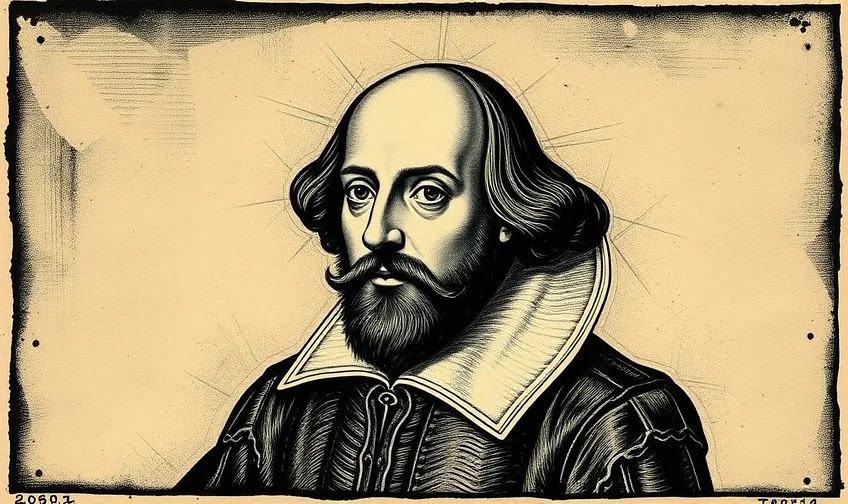
Who wrote the works of Shakespeare?


The Shakespeare authorship question was not a topic I had ever taken a special interest in. As a student I simply accepted the conventional view. Over time, however, I realized that a rigorous, evidence-based case for the glover’s son from Stratford-upon-Avon as author of the works in question had never, in fact, been made and that there were strong reasons to believe that the name associated with these works was a pseudonym and was generally understood to be such by those in the know at the time.

One strong reason to doubt that the man from Stratford wrote these very significant works is the complete lack of a literary paper trail generated during his lifetime, documentary sources (letters, official documents, etc.) which attest to his having been a writer. There is plenty of such evidence for other writers of the time, even for relatively minor figures.

Lately I have been having another look at the Shakespeare authorship debate and was surprised how polarized and rancorous it has become. I will, however, refrain from speculating on the causes for this and simply set out my current position as clearly and concisely as I can, touching on some broader implications of the debate.

First of all, it’s worth noting that the literary-academic mainstream position has shifted. It is now generally acknowledged that significant parts of the Shakespearean dramatic corpus were written by other authors. Co-authorship, whether through actual collaboration or through revision or supplementation of plays by other hands, was common practice at the time and the traditional view of there being a single author of the plays in question is simply no longer tenable. The question (for the plays at least) is now one of primary or principal — rather than sole — authorship.

If I were to delve more deeply into the authorship question, my focus would probably be the poems rather than the plays. For one thing, single authorship for poems is the norm, but there are other reasons. Crucially, it was the publication of the narrative poems “Venus and Adonis” (in 1593) and “The Rape of Lucrece” (in 1594) which first brought the name William Shakespeare to public prominence in a literary context: both publications bore a clear authorial designation and were extremely popular. (“Lucrece”, by the way, is a richer and more accomplished work than “Venus and Adonis”; the latter I find forced, artificial and rather tedious — though interesting from a psychological and moral point of view.)

In my view, doubts may be raised about the conventional view that the man from Stratford wrote the Shakespearean oeuvre purely on the basis of his station in life and the style and content of the poems which are clearly the work of someone steeped in classical literature and Renaissance art (especially painting).

There are indications also of an acute political awareness. As I see it, much of the poetry and the best of the plays are the work of a disillusioned insider attuned to and caught up in the tides and currents of national politics rather than that of an upwardly-mobile provincial with very little education.

With respect to politics, it’s well to bear in mind that politics and religion were intimately intertwined at the time and (given the upheavals of the Reformation) necessarily transcended national borders. The years leading up to Queen Elizabeth’s death (and the all-important succession) were fraught with social and religious tensions, fears of invasion and civil war, widespread censorship and ruthless political repression.

As I have come to see it, many seemingly obscure or puzzling passages in Shakespeare’s works can be seen to represent the bubbling up of a potent political subtext which would have been clear to informed contemporary readers or audiences. In repressive and dangerous times, a large degree of obliqueness is required. For example, the ploy of setting stories in other times and places is a time-honoured way for writers to provide a certain amount of cover and space for dealing with hot political topics.

The lack of any solid evidence based on contemporary sources for the traditional authorship theory calls at the very least for a degree of skepticism regarding the standard theory but the sorts of considerations I have mentioned above have led me beyond a mild skepticism to the conviction — still largely intuitive but bolstered by a certain amount of research and reading — that the man from Stratford-upon-Avon authored neither the poems nor the plays attributed to William Shakespeare.

The matter will not be finally settled, of course, until we know more about who did write these works, until such time as compelling cases connecting a particular author — or set of authors — to large parts of the canon are made, with each such case incorporating the latest historical findings as well as rigorous textual and linguistic analysis. Stylometric analysis has been used clumsily or misapplied in the past but (mainly due to its usefulness in the area of counter-terrorism and other forensic applications) the discipline of stylometry has attracted funding and advanced significantly in recent years. Quantitative, corpus-based approaches, used judiciously and in conjunction with traditional forms of philological and stylistic analysis, have already changed the research landscape and will no doubt lead to more progress on the Shakespeare authorship front, if not to definitive conclusions.

In the broad scheme of things, historical authorship questions are of limited interest and importance but the rise and persistence of what certainly was and continues to look very much like a cult surrounding the Stratford man has serious implications for how certain groups and institutions will be perceived and judged. If things play out as I think they will, hard questions would rightly be asked about the state and status of our literary and scholarly institutions.

Bear in mind that English literature was not taught in universities or seen as forming the basis of a distinct scholarly discipline until the late 19th century. And when it was eventually introduced to the universities it battled to gain respect. Obviously it would be quite damning for the literary-academic establishment and for the institutional framework which it has created over the last century or so if these groups and institutions were seen to have embraced, promoted and perpetuated a totally false narrative about the creation of some of the most important literary works of all time.

Worse, this narrative (at least in terms of its core elements) has until now been treated within the literary-academic world as sacrosanct and not to be questioned. How unscientific is that?

Of course, many of today’s literary scholars see their field — and the humanities more generally — not only as not being continuous with science but even as being in direct opposition to science and scientific ways of thinking and seeing the world. This is a profound mistake in my opinion.

Moral, aesthetic and political judgements are crucially important and are not amenable to purely scientific methods of assessment. But civilization is built on a division of labour, and the various professions are trusted to develop and deploy expertise in specific areas and to be a source of reliable knowledge for the broader population. How else can charlatans and their false claims be effectively exposed?

Myths and sacrosanct narratives are not just top-down phenomena, of course, being sustained and nourished by complex social dynamics involving, amongst other things, politics (broadly construed), in-groups and out-groups, pecking orders and personal egos.

I recall to my shame, soon after graduating with an M.A. in English, pompously dismissing the Shakespeare-authorship doubts of a non-literary friend. In effect, I took his comments as an opportunity to assert my (relative) authority and status. A far more productive — and mature — response would have been simply to try to draw him out on what had caused him to reject the traditional story.

[This piece first appeared last month on my Substack site (markenglish.substack.com). You're welcome to visit and, if you care to, to subscribe in order to receive future posts (by email or alternatively on the Substack app) as they appear. Subscriptions are free and it's easy to unsubscribe.]

Sunday, February 14, 2021

Epistemic relativism in a digital world

Extracts (slightly revised) from an essay of mine which appeared earlier this year at The Electric Agora under the title "Thought control and cultural decline".


[...] One consequence of the cultural and technological changes we are seeing is that the line between political activism and research and knowledge sharing has been erased – at least in many areas. Journalistic and publishing standards have plummeted, obviously. But it is the failure of the universities and other institutions of science and scholarship which is particularly galling for me. The institutions which I most respected – and to which I devoted many years of professional life – are being compromised and debased. Whatever could be politicized has been politicized and in very boring and predictable ways. The trends have been obvious for decades, but I had no idea just how fragile the commitment to science, scholarship and truth-seeking was, both within academia and in the broader community.

At the heart of the problem, as I see it, are postmodern and pragmatic views on truth and history. For whatever reason or reasons, such views have been energetically promoted by academics and school teachers, and they now pervade the broader society, contributing to the failure of political discourse. Everything is being reduced to rhetoric and the here and now.

I am not saying that there are not serious flaws in traditional ways of seeing the world. There are. But, for me, it’s a baby and bathwater thing. If we abandon the path of consilience and convergence in the realm of knowledge, we are ultimately condemning ourselves to intellectual impotence and irrelevance.

This is just rhetoric, you may say, and so it may be. I have not proved anything here. But my claim is a substantive one. It is a claim about the past and a prediction concerning the fate of cultures which abandon traditional epistemic values. The basic idea or intuition behind it is that epistemic relativism facilitates ideological fantasies which in turn lead to a disconnect between cultural and economic realities.

With respect to our future, time will tell. The intellectual fashions of which I speak could conceivably pass as the generation that has promoted and popularized them slowly dies off. But the signs are not good. Great damage has been done.

Maybe these tendencies of thought (mutating now in grotesque and seemingly crazy ways) are best seen as epiphenomena driven by economic forces or by the physics of complex systems. Maybe it doesn’t even make sense to claim that certain ways of thinking caused or contributed to this or that. Nonetheless, we can always observe and describe. Clarity and perspicacity are possible even when we cannot see into the heart of things or identify the root causes of the changes which we observe.

[...]

The advent of digital technologies has compounded the problem and given added traction to relativistic and ahistorical modes of thought. Traditional scholarship was developed within the context of linguistically sophisticated cultures and centered around paper documents which persisted over time. A sense of history was built in. You held firm evidence of the past in your hand, and many of the most important and influential fields of scholarly research dealt with historical (and historico-linguistic) questions. Objective evidence was painstakingly marshalled and deployed. And, over all and over time, epistemic progress occurred. There was a convergence of views on central questions.

The savagery with which scholars were treated during Mao’s Cultural Revolution or by the Khmer Rouge can be seen in this context. It showed how seriously scholars were still taken in the Far East less than fifty years ago. They were perceived as a real threat to forcibly imposed radical ideas.

We are now in an utterly different world, of course. Today’s all-enveloping digital environment makes it relatively easy for history to be rewritten, for minds to be molded at will and at scale. What could be more insidious – and more destructive of individual autonomy – than opaque, monopolistic systems skewing searches for information in order to promote particular views and agendas, and using AI to monitor personal communications and manipulate what people will and won’t see on their screens?

I would like to resist, but don’t see how I could do so effectively. Institutions of learning have been hijacked by ideologues and self-serving bureaucrats. More generally, the common ground which makes effective discourse possible has all but disappeared.

What, then, can one do? Join a rhetorical battle which by its very nature will never result in a clear or decisive outcome? Or withdraw, watch and wait – while cultivating one’s garden?


Friday, August 23, 2019

Scholarship and activism


David Ottlinger has (as I see it) sound intuitions about the nature of postmodernism and other unfortunate intellectual fads and fashions but, as a committed Kantian, he inhabits a very different intellectual world from the one I inhabit. Given his Kantian assumptions, it is no surprise that he has very different views from mine concerning what philosophy and serious scholarship more generally is or should be. He recently wrote a piece claiming that "all philosophy is activist philosophy."

He mentions, amongst others, the Utilitarians: "Jeremy Bentham and John Stuart Mill were not just writing about prison reform. They wanted to reform actual prisons. English prisons. On Fleet Street. Will anyone raise their hands and say that their works are unphilosophical? Or unscholarly?"

Certainly much of the writing of Bentham and Mill is philosophical (encompassing social philosophy, philosophy of law, etc., etc.). This work may plausibly be deemed "scholarly". But there are different senses of the term "scholarship" and its cognates.

This definition of scholarship (Collins English Dictionary) picks out what I see as essential: "Serious academic study and the knowledge that is obtained from it." Unlike science, scholarship is text based. But, like science, it is all about research, about building a body of soundly-based knowledge. It is not (primarily) about changing the world. This distinction (between knowledge and understanding on the one hand and social action on the other) matters.

Ottlinger writes:

Even at their most abstract, most philosophers want to change the world. I have always assumed that Christine Korsgaard actually wants to build the kingdom of ends. Axel Honneth actually wants us to recognize one another.

Philosophers are indeed often most concerned with normative questions, and often this is associated with a desire to change the world in particular ways.

My point is simply that there is a tension between such approaches and traditional, secular notions of scholarship. What scholars (as people) value or want is irrelevant to judging the value of their work as scholarship.

Much writing – old and new
– which is classed today as philosophy is decidedly not scholarship (at least in certain well-accepted senses of the term). This does not necessarily mean that it has no value, of course.

Without his scholarly training, Nietzsche would not have been Nietzsche, and you could say that he was a "scholarly" writer. But the work for which he is known is not scholarship.

Here Ottlinger sets out his views concerning what ("in part") philosophy is:

Even when they don’t have consequences that would dictate changes in our material circumstances or our politics, philosophical ideas matter. They shape our attitudes and values. Two people can be sitting staring at a book, occasionally turning the page, yet only one of them is reading. In the same way two people can be going through the same lives, working the same jobs, having the same sort of families but yet have deeply different inner experiences. They might be leading totally different interior lives. One might be rich and fulfilling, the other barren and empty. Philosophy deals, in part, with these kinds of differences.

The emphasis – as with religion – is on the "inner life". This aspect complements the previously-discussed activist aspect, presumably.

Like David Ottlinger, I am interested in values, but I don't see them as being accessible or amenable to reason (and, by extension, scholarship) in quite the way he does.

Thursday, May 30, 2019

Knowledge of the past, knowledge of the world


Is it acceptable to distinguish between, on the one hand, an account of the past (whatever kind of account it may be) and whatever it is which such an account is, or purports to be, about? I ask this question because I was challenged for using this form of words in a recent discussion with Daniel Kaufman. Not only would I argue that it is acceptable, I would say that such a distinction (or something very like it) is necessary to make sense of the very concept of truth-telling versus lying, or to make sense of the distinction between history and fiction, or between scholarship and polemics, or between science and pseudo-science (in the context of those sciences which deal with the past).

My point is that using the form of words I did does not necessarily commit me to a particular metaphysical view. One can, I think, use and understand such language and employ such a distinction whilst remaining completely agnostic about the nature of the past: it might be a meaningless concept; it might be a figment of our imaginations; it might be in some sense actual but created and determined, in part or in toto, by us; it might be stable, or it might be shifting and unstable (i.e. dreamlike). Or it might be more or less how the vast majority of humans probably think of it: that is, as existing or having existed quite independently of us and our thoughts and desires; as stable and unalterable; as knowable only imperfectly and in part. Most of the listed options are quite silly, of course, but my point is that you can make the statement I made without necessarily committing to any particular view.

There was a second claim of mine to which Dan took exception, calling it “flat out false… [a]nd obviously so." He elaborated on his objections in an essay and, given that the essay prompted further extensive discussion (more than 160 comments), some may feel that the topic has been done to death. My view, however, is that, some recapitulation and clarification may be useful and help to allay confusion and misunderstanding.

The claim in question [made in the course of online discussion of an essay of mine] was that “the past is what it is (or was what it was).” I could elaborate on what I meant by this but perhaps the best way to unpack the intended meaning without inadvertently bringing in new complications is simply to look at the context in which the claim was made.

A commenter, reacting against my skeptical attitude to the stories historians tell and to my suggestion that we should focus instead on reading for ourselves texts from the past, had queried my use of certain words (‘external’, ‘alien’, ‘arbitrary’) in describing how historians often project their own (political, moral, etc.) preoccupations and values into the stories they tell about the past, preoccupations and values which are often quite alien (as I put it) to the people and societies being described.

“All of these words,” he said, “are puzzling to me: ‘external’, ‘imposing’, ‘alien’, ‘arbitrary’. Consider me unpersuaded.”

“The past is what it is (or was what it was),” I replied. “Our present, from the point of view of the past, does not exist. I am using words like ‘alien’ and ‘external’ to make this point. I assume that we both want to understand the past in its own terms; as it was; distorted as little as possible by present-day preoccupations and perspectives. Thus my concerns (overdone in your estimation) about historians wittingly or unwittingly inserting their own values or the values of their time into the stories they tell."

I said that we want to understand the past “in its own terms” and “as it was.” Taken in isolation I concede that this latter phrase especially could be seen to imply the naive view which Dan ascribes to me. But I explained my meaning in the words which immediately followed: [we want our view to be] “distorted as little as possible by present-day preoccupations and perspectives.”

This is why I recommended focusing on primary sources, reading the actual texts from the past in the languages in which they were written. Will we be able to understand them in exactly the same way their authors understood them? No. Our experiences are very different. But scholars who immerse themselves in the writings of a particular period are able to achieve a very good sense of the perspectives of the original authors.

So when I spoke of the past “as it was” I was not talking about a perspectiveless, abstract or noumenal past at all. I was talking about the actual perspectives of actual people who lived and spoke and wrote and some of whose writings we have access to and are able to read.

There was also some discussion of the very distant past, before the advent of observers. Obviously, envisaging this poses greater problems because you cannot talk about the perspectives of the time, and compare or contrast them with our own. There were no perspectives then.

I want to turn now, albeit briefly, to some broader issues and specifically to a piece written some years ago by Daniel Kaufman entitled “Knowledge and Reality” which came up in the discussions described above. It begins as follows:

“If you were to go to the trouble of asking ordinary people about their views on knowledge and reality – accosting them, at random, on street corners, perhaps – and succeeded in getting honest answers, you would likely discover that they hold something like the following view: What it is to know something is to possess some body of information – to have a “picture” of thing – that squares with or is true to reality. If you were to push further, regarding ‘reality’, they would likely characterize it along the lines of “everything that actually exists” (the ‘actually’ intended to preclude imaginary and fictional things like unicorns and Sherlock Holmes).”

Plausibly, this is what people would indeed say. You could see it as a form of naive realism. But, if my view is (as Dan has suggested) a form of naive realism, it is not this form of naive realism.

The crucial issue here for me is a matter of underlying assumptions and perspective. I see my body as an intrinsic part of the physical world and my “self” as the creation of a (physically instantiated) culture. This culture is just as much a part of reality as anything else.

Cultural products – languages, artworks, nursery rhymes, fiction, music, etc. – undeniably constitute a part of reality; and Sherlock Holmes stories and unicorn legends are part of this reality. Obviously the characters and creatures featured in these stories are not real in the sense that real people or real animals are real (though small infants are unable to grasp this). But, as imagined characters and creatures, they are components of the real (and physically instantiated) cultural matrix in which we happen to exist. A cultural matrix of some kind is, of course, a necessary condition for our existence as persons and for our functioning as human beings.

The world is a single world. (At least I see no reason to think otherwise.) It includes myself and others and language and culture as well as all the fundamental processes upon which physics and other sciences are focused.

Though all worthwhile discourse will (in my opinion) be consistent with the findings of science, it will not necessarily be scientific, even in a broad sense of the word. The trick (as I see it) is to feel the pulse and appreciate the potency of language and other mechanisms of cultural expression without metaphysicalizing these processes in any way. (Without falling for Romantic myths about art and artists, for example.)


[This is an abridged version of an article originally published at The Electric Agora.]