Wednesday, May 7, 2025

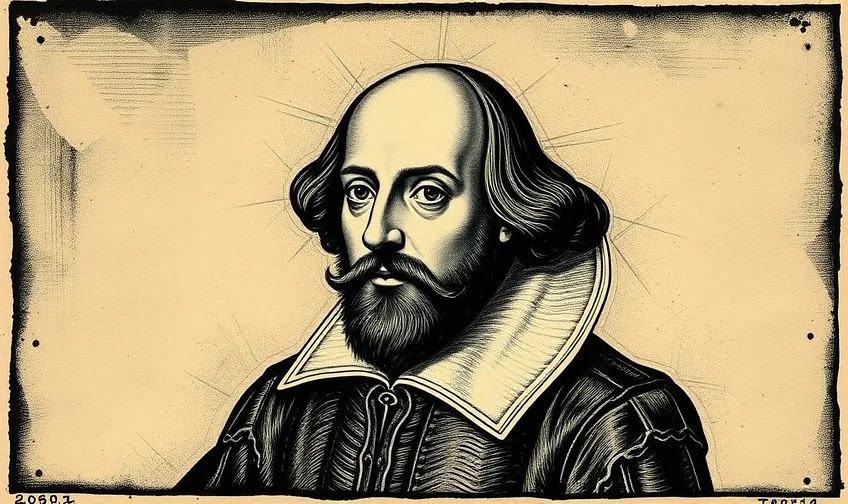
Who wrote the works of Shakespeare?


The Shakespeare authorship question was not a topic I had ever taken a special interest in. As a student I simply accepted the conventional view. Over time, however, I realized that a rigorous, evidence-based case for the glover’s son from Stratford-upon-Avon as author of the works in question had never, in fact, been made and that there were strong reasons to believe that the name associated with these works was a pseudonym and was generally understood to be such by those in the know at the time.

One strong reason to doubt that the man from Stratford wrote these very significant works is the complete lack of a literary paper trail generated during his lifetime, documentary sources (letters, official documents, etc.) which attest to his having been a writer. There is plenty of such evidence for other writers of the time, even for relatively minor figures.

Lately I have been having another look at the Shakespeare authorship debate and was surprised how polarized and rancorous it has become. I will, however, refrain from speculating on the causes for this and simply set out my current position as clearly and concisely as I can, touching on some broader implications of the debate.

First of all, it’s worth noting that the literary-academic mainstream position has shifted. It is now generally acknowledged that significant parts of the Shakespearean dramatic corpus were written by other authors. Co-authorship, whether through actual collaboration or through revision or supplementation of plays by other hands, was common practice at the time and the traditional view of there being a single author of the plays in question is simply no longer tenable. The question (for the plays at least) is now one of primary or principal — rather than sole — authorship.

If I were to delve more deeply into the authorship question, my focus would probably be the poems rather than the plays. For one thing, single authorship for poems is the norm, but there are other reasons. Crucially, it was the publication of the narrative poems “Venus and Adonis” (in 1593) and “The Rape of Lucrece” (in 1594) which first brought the name William Shakespeare to public prominence in a literary context: both publications bore a clear authorial designation and were extremely popular. (“Lucrece”, by the way, is a richer and more accomplished work than “Venus and Adonis”; the latter I find forced, artificial and rather tedious — though interesting from a psychological and moral point of view.)

In my view, doubts may be raised about the conventional view that the man from Stratford wrote the Shakespearean oeuvre purely on the basis of his station in life and the style and content of the poems which are clearly the work of someone steeped in classical literature and Renaissance art (especially painting).

There are indications also of an acute political awareness. As I see it, much of the poetry and the best of the plays are the work of a disillusioned insider attuned to and caught up in the tides and currents of national politics rather than that of an upwardly-mobile provincial with very little education.

With respect to politics, it’s well to bear in mind that politics and religion were intimately intertwined at the time and (given the upheavals of the Reformation) necessarily transcended national borders. The years leading up to Queen Elizabeth’s death (and the all-important succession) were fraught with social and religious tensions, fears of invasion and civil war, widespread censorship and ruthless political repression.

As I have come to see it, many seemingly obscure or puzzling passages in Shakespeare’s works can be seen to represent the bubbling up of a potent political subtext which would have been clear to informed contemporary readers or audiences. In repressive and dangerous times, a large degree of obliqueness is required. For example, the ploy of setting stories in other times and places is a time-honoured way for writers to provide a certain amount of cover and space for dealing with hot political topics.

The lack of any solid evidence based on contemporary sources for the traditional authorship theory calls at the very least for a degree of skepticism regarding the standard theory but the sorts of considerations I have mentioned above have led me beyond a mild skepticism to the conviction — still largely intuitive but bolstered by a certain amount of research and reading — that the man from Stratford-upon-Avon authored neither the poems nor the plays attributed to William Shakespeare.

The matter will not be finally settled, of course, until we know more about who did write these works, until such time as compelling cases connecting a particular author — or set of authors — to large parts of the canon are made, with each such case incorporating the latest historical findings as well as rigorous textual and linguistic analysis. Stylometric analysis has been used clumsily or misapplied in the past but (mainly due to its usefulness in the area of counter-terrorism and other forensic applications) the discipline of stylometry has attracted funding and advanced significantly in recent years. Quantitative, corpus-based approaches, used judiciously and in conjunction with traditional forms of philological and stylistic analysis, have already changed the research landscape and will no doubt lead to more progress on the Shakespeare authorship front, if not to definitive conclusions.

In the broad scheme of things, historical authorship questions are of limited interest and importance but the rise and persistence of what certainly was and continues to look very much like a cult surrounding the Stratford man has serious implications for how certain groups and institutions will be perceived and judged. If things play out as I think they will, hard questions would rightly be asked about the state and status of our literary and scholarly institutions.

Bear in mind that English literature was not taught in universities or seen as forming the basis of a distinct scholarly discipline until the late 19th century. And when it was eventually introduced to the universities it battled to gain respect. Obviously it would be quite damning for the literary-academic establishment and for the institutional framework which it has created over the last century or so if these groups and institutions were seen to have embraced, promoted and perpetuated a totally false narrative about the creation of some of the most important literary works of all time.

Worse, this narrative (at least in terms of its core elements) has until now been treated within the literary-academic world as sacrosanct and not to be questioned. How unscientific is that?

Of course, many of today’s literary scholars see their field — and the humanities more generally — not only as not being continuous with science but even as being in direct opposition to science and scientific ways of thinking and seeing the world. This is a profound mistake in my opinion.

Moral, aesthetic and political judgements are crucially important and are not amenable to purely scientific methods of assessment. But civilization is built on a division of labour, and the various professions are trusted to develop and deploy expertise in specific areas and to be a source of reliable knowledge for the broader population. How else can charlatans and their false claims be effectively exposed?

Myths and sacrosanct narratives are not just top-down phenomena, of course, being sustained and nourished by complex social dynamics involving, amongst other things, politics (broadly construed), in-groups and out-groups, pecking orders and personal egos.

I recall to my shame, soon after graduating with an M.A. in English, pompously dismissing the Shakespeare-authorship doubts of a non-literary friend. In effect, I took his comments as an opportunity to assert my (relative) authority and status. A far more productive — and mature — response would have been simply to try to draw him out on what had caused him to reject the traditional story.

[This piece first appeared last month on my Substack site (markenglish.substack.com). You're welcome to visit and, if you care to, to subscribe in order to receive future posts (by email or alternatively on the Substack app) as they appear. Subscriptions are free and it's easy to unsubscribe.]

Wednesday, September 4, 2024

Language does not "convey thoughts"

I am reprinting here a recent Substack article of mine in which I try to articulate in a very concise way some ideas and intuitions I have been developing about language and communication.

Some months ago I mentioned that, after having spent some time in countries where proficiency in English is not widespread, it was a relief to be in a country which presented no linguistic challenges for me. My focus in England has been on acclimatizing myself to English ways. To say “reacclimatizing” would probably be misleading, given how long it is since I’ve been here and how much things have changed in the intervening decades. I may write about shifts in the social and political mood and changes in the wider culture at a later date but, for now at least, I want to steer clear of politics and related matters.

Lately I’ve been reviewing my views on language, thought and communication, and what follows is a brief statement of my general perspective on the relation between language and thought and the implications of such a view for human communication. Even when there is no “language barrier” in the usual sense of that phrase, effective communication is far from guaranteed. In fact a shared language will often contribute to creating an illusion of agreement, obscuring profound differences in point of view.

In a footnote to one of his essays, Aldous Huxley (obviously recalling a personal experience) talked about an unbridgeable gulf suddenly opening up between two men engaged in a friendly fireside chat on account of a stray remark. A felt or imagined affinity proved to be entirely illusory.

My point is that language, by its very nature as a cultural phenomenon, tends to create illusions of affinity. Its nature is not so much to reveal as to conceal or paper over the very real differences in how speakers see the world.

Language, of course, is a powerful tool for doing what it does best. It facilitates thought and interaction and so makes other aspects of human culture possible. But it doesn’t operate in the way we naively think it does or deliver exactly what it seems to deliver. What linguistic communication doesn’t do is convey thoughts in a literal or even (I suggest) in a metaphorical sense — though we often fool ourselves into thinking that it does.

Let me explain. I have a thought or feeling. I try to put it into words. If it is a thought which draws not only on my commonsense or technical or scientific knowledge of the world but also on my personal memories, values or judgements then it is private to me: it cannot be encapsulated in a string of words and so cannot be conveyed into someone else’s brain. The words, the sentences are in some sense conveyed, sure, but the crucial point is that the same words and phrases trigger different thoughts and feelings in different brains.

The basic building blocks of a language are phonemes (minimal, meaning-distinguishing sounds). Every language has its own set of phonemes from which words and phrases and sentences are built. In any given language the abstract forms of words (lexemes or word stems) constitute a dynamic lexicon which is involved in complex combinatorial processes involving the formation of actual words and sentences (processes studied under the rubrics of morphology and syntax).

At least a rough distinction can be made between language-specific brain areas and non-language-specific brain areas. Phonological and morphosyntactic processes operate largely unconsciously in specific areas of the brain and are relatively self-contained. At a certain level of abstraction, these processes can be explicitly described and modelled (i.e. formalized). But semantic processing spreads a much wider net in terms of the brain areas involved and is not formalizable. It draws not only on language-specific brain areas but also on non-language-specific areas, including those dealing with emotions, memories of lived experience, general reasoning and problem-solving, etc.. This point has been dramatically illustrated in fMRI studies.

The key point here is that semantic processing — unlike phonological and morphosyntactic processing — draws on general aspects of thought, including memories and patterns of emotional response which are necessarily unique to the individual. The complex phonological and morphosyntactic processes which give human language its remarkable power are, in an essential sense, shared. These processes only arise and sustain themselves over time within a shared social and cultural milieu. They represent something that speakers of a given language have in common. The semantic aspect of language also involves shared understandings of course, but the sharing involved here is of a much more limited nature.

Take a simple noun like “dog”. It has a publicly-agreed primary meaning or denotation and various other (also publicly-agreed) senses. But even when used in its primary sense to refer to a particular kind of animal, the thoughts and feelings and memories triggered in my mind by this word will (because of our different personal histories) be very different from the thoughts and feelings and memories which the word triggers in your mind. And if this is so with such a mundane word as “dog”, how much more divergent will thoughts triggered by more value-laden or abstract expressions be?

Such differences relate to (but cannot be completely reduced to) the concept of connotation. Connotations are, like denotations, usually publicly shared (at least to some extent) but, being tied to emotion and personal memories, they are necessarily more vague and difficult to define. Certain words are universally accepted as having a negative connotation (like the noun “lackey”, for example, or the adjective “sanctimonious”) but in many cases the connotation is not obvious or easy to describe and different speakers may report diametrically opposed attitudes.

Though the brain processes underlying linguistic processing remain obscure, the basic elements and patterns of a language — apart from the intricacies of semantics — can be discovered and written down. Linguists have been doing this sort of thing for hundreds of years. In principle at least, anyone with access to a dictionary and a grammar can attain technical proficiency in a new language. All of this suggests that the core mechanisms of language are neither deep nor private in any meaningful sense.

Our personal thoughts, by contrast, remain essentially private, however much we attempt to put them into words or express them in other ways. Literary and other artistic creations are notoriously subject to multiple, divergent interpretations. Gestures can be subtle and expressive but are limited in scope and range.

In some ways, the idea that our personal thoughts remain forever private is confronting. But there is also comfort to be found here, especially in an age awash with spin and propaganda and dominated by social media. For there is, after all, a sacrosanct space where judgements are made or withheld, and where integrity and truth still matter and cannot be threatened.

In fact, the idea I am trying to convey here (an idea, note, not a thought!) can be extremely valuable in helping to minimize frustration and stress.

And lowering our expectations concerning what language can reasonably be expected to do will also (somewhat paradoxically perhaps) make us better communicators.

Tuesday, May 7, 2024

Trying out Substack

Here is the link to my latest Substack piece:


If this Substack site (called Parsing the Parade) gets some traction I may put my main focus there and put my other sites on the back burner. At this stage, however, it is just an experiment.

Submit your email address and new posts (maybe one every few weeks?) will be sent to your email inbox. It's free, and it's easy to unsubscribe at any time.

Here is the general link to Parsing the Parade:

Sunday, February 18, 2024

L.L. Zamenhof and Zionism

The other day, walking through a small park in the district of Pietà on my way to Valletta, I was surprised to see a bust of L.L. Zamenhof, the creator of the international auxiliary language known as Esperanto. My first thought was, I didn't know he had a connection with Malta. And, as it happens, he didn't!

Zamenhof was born in what was then the Russian Empire and spent most of his life in the city of Warsaw. For reasons I have yet to fathom (but which probably relate to Malta's somewhat fraught linguistic ecology) Zamenhof's ideas took root here and some five decades ago the local Esperanto Society saw fit to devote funds to the creation of a public monument.

It's not a great work of art and the awkwardly-truncated arms are a little distracting. But this memorial is not bad as such projects go, and certainly a good deal less ugly than many of the official commemorative sculptures and monuments I have seen on this island.

Despite my lack of interest in Esperanto (the very notion of a constructed international auxiliary language is ill-conceived, in my opinion), I quite like the monument. Its scale and proportions are perfect and there is no nonsense or pomposity about it.

Zamenhof was a physician by profession, specialising in ophthalmology, and not an academic linguist. His main linguistic project was inspired by the naive belief that, if the peoples of the world shared a common language, peace would reign. Basically Zamenhof was a religious rather than a political thinker; his social philosophy was based on Rabbinic Judaism, specifically on the ideas of Hillel the Elder and his school.

Responding to the rise of violence against Jews within the Russian Empire which followed the assassination of the Tsar (Alexander II) in 1881, Zamenhof became involved with proto-Zionist groups, founding the Warsaw chapter of Hibbat Zion. He soon had doubts, however, and withdrew from the movement.

Zamenhof was convinced that Zionism, as he saw it developing in the later years of the 19th century and into the 20th, was fatally flawed and would not serve the true interests of the Jewish people.

In a work published in Russian in 1901, Zamenhof gave three reasons why Zionism was unrealizable: "firstly, because the Hebrew language is not alive, and if the Jewish religion did not exist, it would have died a long time ago; secondly, Zionism is wrong in its conception of Jewish nationalistic feeling: the Jews of various countries have no common ground apart from the religious one; thirdly, Palestine is too small – it will contain approximately only two million – so the whole Jewish question will not be solved."

Note his emphasis on the Jewish religion as the key driver of Jewish identity. This makes sense to me. His views on nationalism, on the other hand, I have reservations about.

In 1914 he wrote: "I am deeply convinced that all nationalism represents only the greatest misfortune for humanity, and that the aim of all people should be: to create a harmonious humanity. It is true that the nationalism of oppressed nations – as a natural self-defense reaction – is much more forgivable than the nationalism of oppressing nations; but, if the nationalism of the strong is ignoble, the nationalism of the weak is imprudent; both give birth to and support each other, and present a vicious circle of misfortunes, from which mankind will never emerge, if each of us will not sacrifice his group self-love and will not try to stand on completely neutral ground."

There is real insight here; the logic is consistent and, within limits, compelling. The problem, as I see it, is with Zamenhof's assumptions: his Enlightenment-inspired, "blank slate" view of human nature; and his implicit conflation of nation and nation-state.

Zamenhof ignores the fact that "group self-love" is a perennial human reality. Certainly it can get out of hand and generate xenophobia and violence, but it also plays a positive – in fact an essential – role in encouraging cooperative behaviour within groups.

The Zionist movement understood this and rejected Zamenhof's dogmatic and naive internationalism. So far, so good.

What the Zionists didn't grasp, however, is that combining their views on the importance of group identity with a perspective on nationhood shaped by Romantic political myths would only lead to trouble. Given the complexities of ethnic and cultural divides, seeing the nation-state as a universal solution, as the only way to satisfy ethnically-based yearnings and feelings of group identity is both confused and dangerous.

Such an approach leads inevitably to "a vicious circle of misfortunes" (as Zamenhof put it), to an unending cycle of conflict and violence.

Language policies in Malta

I am posting here the language-related paragraphs of a short piece entitled "Maltese culture and language" which appeared earlier this month at Conservative Tendency and also on my WordPress site:

Maltese is a very unusual language. Its grammatical structure and morphology derive from an old form of Arabic (Siculo-Arabic) while much of its lexicon derives from Italian and other European languages (including English). Since independence in 1964, the Maltese language has been strongly promoted and supported by the government and official bodies (with a bit of help from the European Union since 2004).

In general, I am not a supporter of keeping languages alive via legislation and regulation. Language change and death is a natural process and individuals should as far as possible be free to choose what language or languages they want to speak and what language or languages their children should speak and be educated in. I recognize, however, that language policies of one kind or another are necessary in multilingual jurisdictions and decisions must be made. The way I see it, something is gained and something is lost either way when it comes to a choice between promoting a local language (or dialect) as against a more widely-spoken and professionally useful one.

As I understand it, the policy during British colonial times was to promote the use of English and standard Italian rather than Maltese. Italian is still spoken, though it is less prevalent than it was.

English remains an official language and is taught in schools but proficiency varies greatly and most locals (including young professionals) are more comfortable speaking Maltese than English. The situation is slowly changing however. Survey results indicate that Maltese under-20s are more likely to favour English and identify English as their first language than other age groups.

Sunday, February 4, 2024

Shorelines

There is something universal about seas and oceans and even standing on the shore you can sense it. Last year on a beach on a Greek island I was vividly reminded of childhood holidays by the sea on the other side of the world. More recently I have been living in the district of Msida in Malta and have been spending a lot of time wandering the shorelines of Ta' Xbiex, Gżira and Sliema. Again, that sense of familiarity  despite the unfamiliar (primary) language and culture of the island.

Over time inhabited lands are necessarily designated, defined and shaped by cultures of one kind or another. Seas and oceans have names and are often affected (negatively!) by human activities but generally speaking they are not marked or "owned" by particular cultures.

There was once a culture of seafarers which incorporated not only practical and technical knowledge and norms of behaviour  as today's somewhat attenuated version still does  but also folk wisdom and fanciful myths. This culture was essentially reactive: it was a coping culture, not a building culture. It was also essentially universal in that  for the most part at any rate  it transcended national and local preoccupations. (The life and works of the Polish sea captain-turned-writer, Joseph Conrad, provide ample evidence to support this last claim, I think.)

As I see it, then, the shoreline's fascination is enhanced by the fact that it lies between two worlds: the culturally-bounded and the culturally-unbounded (or universal).

Is some kind of deep memory at work here also? It wouldn't be surprising, given the central role that seaside (and lakeside) environments played in shaping the evolutionary development of our species.

Going much further back, rock pools, warmed by the sun, constituted a crucially important environment for the development of some of the earliest lifeforms on this planet. The first photosynthesizing organisms (cyanobacteria) appeared about 2.7 billion years ago in such environments.

This takes us well beyond any plausible "deep memory" hypothesis, of course, but a fascination with rock pools, and intertidal zones more generally, needs no such explanation. Factors such as natural  and perhaps intellectual  curiosity are at play here.

My own aesthetic preference for rocky (as distinct from sandy) shorelines is easily explained in such terms  in terms, that is, of general cast of mind, combined (in my case) with extensive childhood exposure to such environments and memories thereof.

Sunday, December 18, 2022

AI, work and human dignity

Speculations about the impact of AI and imagined technological utopias or dystopias necessarily draw on – and reveal a lot about – our fundamental assumptions about human nature. Robert Gressis recently wrote a piece on these themes.

Though his approach is open and undogmatic, his basically metaphysical (and indeed Kantian) assumptions show through. In my opinion, they are counterproductive and create unnecessary problems and confusions.

“I tell myself,” he writes, “that we are not mere playthings of nature, but are instead rational beings who can and should conduct themselves in a certain way, lest we dishonor our dignity.”

Our dignity lies, as he sees it, “in rising above nature.” This just doesn’t make sense to me.

Nor does any notion of “free will” which goes beyond the ordinary (and legal) sense of acting freely (i.e. being of sound mind and not being coerced).

What’s more, ideas like “rising above nature” – and the (originally religious) notion of free will – are quite unnecessary. In fact, I would go so far as to say that only in their absence can we maintain a robust and reasonable conception of human dignity.

The only dignity that counts – or indeed makes sense – is that which is exemplified in behaviour. It relates to how we conduct ourselves (given all the constraints etc. which inevitably apply in specific situations).

Do we behave like egomaniacs or spoilt brats? Or do we apply a modicum of intelligence to our activities, exercising appropriate restraint, self-discipline etc.? Are we sensitive to the needs of others? Are we responsible and trustworthy? These are the sorts of factors which determine whether or not human dignity is being exemplified.

And – significantly – AI does not challenge us in these sorts of matters. Morality and other value-related matters are distinctively human – and will remain so.

Gressis makes a comparison – and contrast – between between future redundant humans and pets.

“[...] I think the utopia-worriers—the people who fear that an AI-fueled paradise will be unsatisfying—are fearful because they think it should be unsatisfying. But should it be unsatisfying? Pets have guided my thinking on this question. I look at my cat, and I joke, “you get paid way too much.” The point of the joke is that I’m expecting more from my cat than he can give. Sure, he’s cute and I like petting him, but he doesn’t do anything useful, like killing bugs. Instead, he just lies around, gets some scritches, and licks his genitals.”

The analogy is amusing. But the crucial point here, I think, is that pets are quite different from us. They don’t have our range of freedom. They are more hard-wired than we are. And, of course, they don’t have language.

Gressis writes: “If the AI-optimists are right ([…] big if, but it doesn’t seem impossible), then there will come a time when humans will be as useful as pets. Our use-value will consist almost entirely in our ability to entertain each other.”

Not just to entertain but to communicate and interact in multiple ways. To challenge, to love, to annoy, to betray… Again, it’s the moral realm (broadly conceived) that counts – and always will count – for us. And it cannot be usurped by any technology.

AI taking over various jobs is obviously threatening from a financial and psychological point of view for those who earn their living and/or derive their self-esteem from jobs which AI threatens to replace. But this is simply an extension of a familiar pattern which is evident throughout history – at least during periods of rapid technological progress. The only difference now is that it is not just manual and low-level office workers who are being made redundant but also professionals.

I think that Gressis sees AI as being more problematic than I do partly because of his metaphysical presuppositions and partly because he sees work as being more morally and psychologically central and important than I see it to be.

For me work is just another unfortunate necessity; something one has to do to earn a living, support a family, build up savings. Most of my – rather patchy – working life was spent teaching in universities. It was (much of the time, at any rate) reasonably congenial and pleasant. But, even when things were going well, professionally speaking, my sense is that I generally only experienced happiness during idle moments and via not-directly work-related interactions rather than through my actual work or (admittedly modest) professional achievements.

Monday, September 12, 2022

Against ideology


As we watch economies fail and societies move into the more advanced stages of dysfunction and dissolution, there is a lot of political finger-pointing going on. Blame is typically assigned in such a way as not to upset one’s preferred political or economic narratives.

Targeting ideological enemies necessarily entails a labeling process. The terms used are normally vague and abstract but loaded with emotional content – positive for terms designating “us”, strongly negative for terms designating “them”. Though the abstractness of the terms in question may confer a veneer of intellectual seriousness, the communicational dynamic remains purely rhetorical. Meaning is reduced to connotation, the various “isms” and so on merely providing convenient ways of encapsulating ill-defined sets of attachments on the one hand and aversions on the other.

Political ideologies are real is the sense that they affect the way people interpret history and current events and motivate action but, incorporating as they inevitably do political myths and simplifying abstractions, they are quite useless as analytical tools. This is not to say, of course, that terms like fascism, corporatism, socialism, capitalism, etc. – qualified to distinguish different forms where necessary – cannot be a useful shorthand when they are used descriptively and in historically informed ways.

The trouble is, such terms are rarely used like this. More often than not they are used rhetorically: as tribal markers, as weapons of ideological combat.

I do not have a particular ideological position to which I am committed or which I am promoting. This is not for want of trying to discover or build one. After much study and thought, I have come to the conclusion that this desire to choose or construct a preferred ideology is ill-conceived.

It is quite unnecessary to have some kind of explicit social blueprint in mind. Better not to, in fact (for all sorts of reasons, most of them relating to the contingent and context-dependent nature of social and cultural interactions).

Part of my Ph.D. thesis was focused on the revival in the 1930s of the principles of economic liberalism and their development and application during the post-WW2 era. The broad aim of the self-styled “neoliberals” – mainly European thinkers – whose work I was writing about was to offer an alternative to totalitarianisms of the left and the right. This is a goal with which I was (and still am) sympathetic. But, as I say, I have come to believe that no abstract system or ideology is adequate to deal either with questions of ends (which involve crucial moral choices) or means. How is an abstract system supposed to mesh with the complexities of an historically evolved and evolving social structure? The old joke has the Irishman telling the stranger who asked for directions, “Well, if I were you, I wouldn’t start from here.” It matters – a lot – where you happen to be.

Liberal institutions developed within – and were dependent on for their proper functioning – cultures which had certain common features. A certain kind of culture and a certain level of trust and moral attainment are prerequisites for liberal values and institutions to thrive. Those conditions no longer apply in the societies with which I am most familiar.

Tuesday, August 9, 2022

Remarks on culture and religion

I want to recapitulate here and expand on some points I made elsewhere in partial response to a piece written by Daniel Kaufman entitled "Remarks on religion".

First of all, I should explain that I am not much interested in talking about religion in religious or strictly philosophical terms. Philosophical discussions about the existence of God, free will, etc. strike me as fundamentally theological in nature even if an atheistic line is being pursued (as it often is). I have the same feeling about much of philosophical ethics. It has its roots in (moral) theology and religious disputation – and it shows!

It is worth noting that many religious people – including intelligent ones – have been hostile to theology and the ready application of philosophical methods to religious questions. Blaise Pascal, for example, distinguished between the God of Abraham, Isaac and Jacob (his God) and "the God of the philosophers" (as he scornfully put it). He satirized the casuistry of the Jesuits of his day and the trivialization of morality and the hypocrisy which it entailed.

I am sympathetic to Pascal's point of view but, since I am not religious, my rejection of theology is based on different grounds from his and is more thoroughgoing. I simply do not see theology as a serious or viable area of study.

In earlier times, of course, theology (or divinity) was widely seen as a high-status discipline: the queen of the sciences, no less. And, in the Christian West, philosophy derived its scholarly status from theology of which it was seen to be an integral part, as well as from ancient Greek and Roman thinkers many of whose ideas had been incorporated into medieval and Renaissance thought. Plato, Aristotle and the Stoics were especially influential.

Two broad areas which developed within this theological matrix did become viable secular fields of study: natural philosophy (or what we now generally call science); and logic. Mathematics had regressed in Roman and medieval times and only began to flourish again in the 17th century with the rise of modern science.

I realize all this is broad-brush and oversimplified but it should help explain my general attitude to philosophy and religion and, with respect to the latter, my tendency to focus on the historical, cultural and psychological side of things.

Dan had contrasted the evangelical and Pentecostal Christians of the Bible Belt with two Jewish Hasidic sects:

"When I first moved to the Bible Belt, I was surprised by the level of confidence people had in their particular brand of evangelical or Pentecostal Christianity (some of them brands I’d never even heard of until that point) and used to think that the best thing for them would be to live in a Lubavitch or Satmar community for a few weeks, where it would become quickly evident that there were people far more religiously committed and more rigorous in their religious lifestyles than they are."

Unlike these Jewish groups, evangelicals and Pentecostals profess and proclaim (in Kaufman’s words) their own “extraordinary and intense religious faith” whilst behaving in other respects “pretty much like everyone else.”

The main criticism here is being directed at a particular group of Christians and I can't really comment on its appropriateness. I do have the sense, however, that the tenor of these passages may betray a lack awareness of the standard Christian view of what religious commitment is at its core and what it entails. Whatever it is, it is decidedly not about outward forms and observances; and it is not in the least competitive. The very notion of "religious lifestyle" is alien to the standard Christian view as I understand it.

I have no direct knowledge of "Bible Belt" Christians, nor of the Jewish groups mentioned. Regarding the latter, Chabad-Lubavitch and Satmar are rival, Brooklyn-based Hasidic sects originating in Russia and Hungary respectively. They differ, amongst other things, in terms of their attitudes to outreach and proselytizing within the wider Jewish community [Chabad is active in such activity but Satmar is not]; and in terms of their attitudes to Zionism and the state of Israel [Satmar remains staunchly anti-Zionist].

Dan talks about the “self-deception” or “psychic indolence” involved in seeing ancient religious texts as embodying eternal truths “about the nature and operation of the universe and everything and everyone in it” rather than in more realistic terms. He characterizes sacred texts as “fascinating and often lurid elements from the eclectic, messy, often ugly history of human development.” Fair comment.

I would have thought that one way US evangelical Christians differ from, say, Jewish ultra-Orthodox or extremist Islamic groups, is in their relative openness to the modern world, to ordinary life.

Mixing faith-based and modern views necessarily involves inconsistencies. But compartmentalization of one kind or another is a universal feature of our brains. Some of the greatest scientists bracketed out their religious beliefs in rather crude ways or aligned themselves with extreme and anti-rational ideologies or political movements. Though most of us manage to avoid such extremes, the logical aspect of our thinking is always in an awkward or ambiguous relationship with more emotional aspects of thought – including those that relate to existential anxieties, to attachments and aversions, to religion, politics, self-image and identity.

The final issue I raised was that of cultural and religious identity. In the course of his discussion, Dan explicitly acknowledged his Jewish lineage as well as the essentially secular Jewish culture in which he was raised. For his parents – and for himself, apparently – ancestral religious practices continued to be meaningful in the absence of belief.

For me there is a tension here, a potential problem. I realize that Judaism is not creed-based or doctrinal in the way many Christian groupings are, but beliefs are still important. It seems to me that if a member of a religious (or even a political) group stops believing the central doctrines of the group, he or she ceases to be, in a real and fundamental sense, a part of that group, even if there is little change in outward behaviour. What was deeply motivated is now merely "going through the motions." This phrase says it all.

I see that people brought up within a particular religious group or sect or denomination will continue to share a common cultural background but if they have left the sect or ceased believing its fundamental tenets their sense of themselves – and of their relationship to the group – changes. Their sense of identification with the group is necessarily reduced and qualified. This is why defining Jewishness largely in terms of the religious tradition (in terms, that is, of Judaism) is obviously a problem for non-religious Jews. When scriptures lose their special status and come to be seen solely in historical or literary terms, when prayers and rituals are no longer expressions of religious experience but mere nostalgic forms or reassuring customs, they gradually but inexorably lose their power to command attention and motivate religious practice. They become museum pieces. They die.

Religious Jews, of course, are committed to maintaining not just the rituals and practices but also the beliefs that shaped and motivated these practices. So the tension I speak of here does not apply to them. (The problems of inconsistency and compartmentalization alluded to above may apply, however.)

My preference is to see group affiliations in personal and individual terms, simply in terms of sets of shared and overlapping cultural elements and personal values. And, to the extent that Jewishness is seen in this way (i.e. as an evolving element within various disparate cultures rather than in terms of direct links with an ancient, Hebrew-speaking population and the religious practices and beliefs of that population), existential questions about cultural survival simply will not arise.


Sunday, July 24, 2022

The decline of literacy

I find myself frequently having to modify and simplify my language to avoid misunderstandings. This is partly because of traditional divergences between British and American usage and the inevitable compromises that come with globalized and inter-cultural communication. But it goes further than this and relates, I think, to declines in levels of literacy. Levels of literacy impact not only on written but also on spoken forms of language. General literacy allows for larger lexicons and more complex syntactic forms.

Another factor is that, as the status and role of literary models have diminished, foundations for normative grammar have been eroded. In the past, languages and dialects without a (written) literature were widely perceived as inferior to languages with an established literature. Such a view is mistaken. But it was widely held. Writers were seen not only as adding value to the culture and the language but as culture-creators and nation-builders.

As I say, such beliefs are problematic, but texts did provide semantic and syntactic stability. The existence of a canon of literary texts implicitly promoted a standard form of the language as well as providing cultural reference points.

What’s more, a standard education typically incorporated elements of historical linguistics and/or classical languages. This meant that most educated speakers had a relatively sophisticated grasp of the nature and dynamics of language which in turn affected how language was used in day-to-day life.

One aspect of this which is not often discussed relates to etymology and subtleties of meaning. Knowledge of the original meaning of a word-stem affects the way a word is used and understood, even if the meaning has changed significantly over time. These sorts of subtle, etymology-based connotation no longer apply for most listeners or readers, with the result that certain fine distinctions of meaning become impossible to convey.

We currently have a cultural elite which is ostensibly – and paradoxically – committed to anti-elitism, a situation which militates against standard, or "prestige", forms of language being supported or promoted. Political and cultural fashions will inevitably change but the sorts of literary-oriented values which were embedded until recent times in Western and some Eastern cultures are probably lost forever.

Technological factors (especially the digitization of information and communication) will no doubt continue to drive changes in the longer term, and these changes – especially the replacement of reading for pleasure with other easily-accessible forms of entertainment – mean that the high levels of literacy and linguistic knowledge which characterized the professional and middle classes until the later 20th century will not return any time soon.

Tuesday, May 10, 2022

Dreams, perceptions and delusions

I have never considered dreams – my own or anyone else’s – worth recording or trying to analyze in any serious way, but I have always maintained an interest in the various manifestations of consciousness and the functioning – and malfunctioning – of the brain. Doing some sorting recently, I came across some scribbled notes which I made a while ago and which got me thinking again about dreams, perceptions and peculiar waking experiences.

Dreams have a special fascination, of course. Operating outside the normal imperatives of waking life, the brain takes on a (sometimes disturbing) life of its own.

Various kinds of waking experience also give us insights into the workings of our brains. Especially under stressful conditions, unexpected things happen: hallucinations, visions, so-called mystical experiences, devastating waves of fear or dread, unexplained convictions.

With respect to peculiar waking experiences, my own have been (mercifully) few and far between. One such experience was utterly terrifying and occurred in early adolescence. No drugs were involved. I may write about it another time.

A far less harrowing episode occurred a couple of years earlier. It involved a failure of visual processing. Three spatial dimensions collapsed into two. The scene before me decomposed and I could no longer distinguish form, just colour, a kaleidoscope of colour. Quite beautiful actually. Even (in the context) strangely liberating. Again, no drugs were involved.

As a child, I did not know much about the brain, but this experience gave me a sense of the precariousness and the general nature of the visual system. There were obviously all sorts of complex mechanisms in play, and this brief failure of the system had allowed me to look behind the curtain, as it were, to get a glimpse of the not exactly raw but non-integrated data that lay behind the finished product which the visual system normally presents us with. What was normally integrated had, for a time, disintegrated, revealing not only the precariousness of the system but something of its distributed, layered and constructive nature.

Dreams and delusions involve not only visual processing but also a more central feature of the brain, its narrative-generating function. In dreams, the narrative-generating function is given free rein, being largely detached from sensory input and the constraints and imperatives, both physical and logical, that moving around in the real world necessarily entail. In this respect dreams have parallels with hallucinations (where sensory input is overridden or is processed in anomalous ways) as well as with other kinds of delusion.

The stories we tell ourselves in our waking hours to orientate ourselves within the social world derive largely from stored information but real-time sensory input is also important. As we all know, there is a tendency for these stories to become detached from physical and social realities. Such tendencies are exacerbated by processing failures in individual brains, brought on by stress, disease, aging, etc..

Take the following example. Late one night my mother was in hospital recovering from major surgery. I got a call from the hospital asking me to come in because she was upset and they thought I might be able to calm her down. It turned out she was sleep-deprived and showing signs of paranoia. She was convinced that the nursing staff were not humans. They were aliens from another planet. But, being a very level-headed and intelligent woman, she was also aware of the silliness of this conviction and in fact embarrassed about it. So it wasn’t too hard for me to reassure her.

Capgras syndrome involves integration failures in respect of the various brain processes associated with the recognition of and responses to known individuals. The sufferer will recognize the face and body in question but, because the usual emotional responses associated with this recognition do not kick in, he or she will have a strong sense that this is not really the person normally associated with that body. In this manner, loved ones may be perceived (for brief or extended periods of time) as hostile intruders. I have had the experience of having to deal with transient episodes of this syndrome in aged relatives. It’s quite common, I believe.

As I indicated above, what got me thinking again about these topics was coming across some scribbled notes from the past. One document related to a dream which my mother had – and told me about – twelve years ago. I quote verbatim from my notes…

Last night’s dream involved the disruption of a church service. In the dream she was a school-aged child, though an adult friend whom she had not known in childhood appeared in the dream and spoke to her. The church in question was specified by name. It was not one she had known as a child but was the church she was married in.

In the dream she sought out and gathered together the noisiest things she could find: tin cans and “a strange kind of metallic vessel” – she wasn’t sure what it was but she was “pretty sure it would make a noise.”

“I tied all these things together and crept up towards the altar where the priest was moving to and fro. The array of objects made a very disruptive noise and the priest swung around and here’s this girl shaking [the objects] madly to make as much noise as possible. There was nothing anyone could do, it was such a surprise. I wanted to irritate him, to stop him doing all the things I hated, worshipping this God who wasn’t there.”

“I walked out [of the church via] the side aisle. People looked the other way. They would see what I was doing as wrong and I knew I was doing wrong – but I had to do it, to try and stop them. I threw the noise-making contraption onto the ground outside the church…”

I am not saying that this dream has any great significance but it is amusing in its way. It also bears witness, I think, to longstanding frustrations and to an independent spirit adamantly opposed to (what was perceived as) obfuscation and mystification.


[This is an abridged and revised version of a piece which appeared recently at The Electric Agora.]

Sunday, April 3, 2022

Distorting history

Bharath Vallabha used to be a regular contributor to The Electric Agora. He returned recently with a piece about how, in his view, some of the central and most polarizing debates of post-World War 2 academic philosophy were the product of a misreading of intellectual history. Both Gilbert Ryle and Richard Rorty were extremely influential and both gave a false picture of Descartes' thought and the Cartesian tradition more generally.

Here is Bharath on Rorty and Ryle and how his own views have changed:

[Rorty] went from being a Princeton philosophy professor and president of the APA to basically decamping to literature departments. He was right about problems with the direction of analytic philosophy, but it was a mistake to connect that criticism to Descartes et al.. Philosophy and the Mirror of Nature is no more a careful study of Descartes than Ryle’s Concept of Mind was... I think Rorty was reading a lot of what was wrong with analytic philosophy back into early modern philosophers. This kind of reading back led to Rorty being polarizing, because he was lumping together 300 years of thinkers in a way that divorced them from their historical context.

To be honest this is a new thought for me. For longest time I was on the side of Rorty and Ryle against early modern philosophy of mind and as it carried over into analytic philosophy... Rorty’s book says more about Rorty’s struggle with professional philosophy than it does about Descartes and Kant. It seems strange to me now that there is some special conception of mind common to Descartes to Nagel even given the vast differences in context of what being a philosopher is between them. My thought is if we let go of this kind of generalizing over centuries to tell who the good guys are and who the bad guys, would be easier to listen to each other – in ways for example Rorty and his Princeton colleagues couldn’t do. And in ways current traditionalists and social justice warriors now can’t, because both are wedded to historical generalizations.

On binary thinking:

Resentationalism versus Pragmatism, and fitting historical figures into those categories, forces a binary choice at every turn, in the present and in the reading of the past. There is then no way to rethink the terms of the debate. However, if one sees historical figures with new eyes and with greater openness to historical context, new, more productive conversations are possible.

I agree with this entirely. Like Bharath, I favour more historically-oriented approaches. And I too have only recently come to realize the extent to which Ryle was misrepresenting Descartes. Rorty distorted history also. He was worse than Ryle, in my opinion, because he let politics intrude into his professional work, and also because of his anti-science bias.

Despite his criticisms, Bharath made it clear that he values the writings of Rorty and Ryle (if not the work of their followers). I am less positive. Though I give credit to both Ryle and Rorty for their stylistic power and the thought-provoking nature of their best work, my reservations outweigh my sympathies.

I share Ryle's secular outlook and his commitment to an apolitical approach to academic work. But, in my opinion, any attempt to carve out a sacrosanct space, distinct from the sciences, for an academic philosophy of mind is fatally flawed.

In terms of general outlook, however, I am definitely further away from Rorty than I am from Ryle. I am close to the former on one matter only, as far as I can tell. I am sympathetic to his disillusionment with and drift away from academic philosophy.

Rorty's roots were in literature (his father was a poet) and I understand that he took comfort in his final illness reading the likes of Swinburne rather than philosophical works. (Martin Heidegger – another master of historical distortion – followed a similar trajectory.)

Wednesday, February 23, 2022

More on culture and language

I recently set out some of my basic beliefs and assumptions about what there is and about what makes a person.

"Biology and culture. Culture and biology. That’s not all there is, but – with the inorganic world within which biological organisms evolved and within which they exist – that’s enough to make a human being..."

And, in a recent podcast, I talked about Gottlob Frege's beliefs and assumptions about life and language, views which I endorse to a large extent. Frege saw human thought and language in fundamentally organic and holistic terms.


I am adding here a few general thoughts on culture and language. My sense is that these various fragments are compatible with one another and form (potentially at least) a more-or-less coherent whole.

Language is probably the most basic cultural element for two reasons: it bridges biology and culture in ways that other cultural elements do not; and it is the foundation or at least a sine qua non for the development of many other cultural forms and practices, from religion and politics to mathematics.

Culture is undoubtedly real but a culture is impossible to define in a precise way. The same applies to language and languages. Just as each of us deploys a unique linguistic system (idiolect) which is different in various ways – scope and details of lexicon, aspects of syntax, pronunciation, etc. – from the linguistic systems deployed by others within our language group, so each of us embodies a unique cultural mix.

This idea obviously relates to the idea of individualism and, I think, justifies taking individualism seriously as a potential way of dealing with social problems related to various kinds of identity politics and stereotyping.

Degrees of overlap vary between individuals but, because cultural elements are so diverse, there is no single measure of commonality. Some cultural elements are easily isolated and compared but most are not.

Take language. Though the idiolect notion is (in my opinion) central to any truly scientific approach to language, for practical purposes it is useful – necessary in fact – to distinguish between languages or dialects. This inevitably involves abstraction and simplification – but then so does most of our ordinary, day-to-day thinking.

Religion is another fairly clearly identifiable cultural element, at least in the sense that the churches and sects and religious movements of the modern world can be defined and demarcated in both social and doctrinal terms. Complications arise, however, when you start to look at how participating individuals envisage and justify their participation. Congregations may be gathered together physically, but each individual will have a unique perspective on what they are doing and why.

I am conceding that identifying and drawing cultural distinctions within certain defined areas is not only possible but inevitable and necessary. But defining and drawing these distinctions is difficult to do in a rigorous way. And, if one is talking about a culture in a general sense, that task becomes well-nigh impossible.

The notion of a national culture is particularly problematic. Where there can be said to be such a thing, it is of necessity imposed and artificial – in contrast to regional cultures, for example, which are shaped over long periods of time by local conditions and practices.

Generally, it makes more sense to talk of national myths and ideologies rather than national cultures, I think. Perhaps if one is looking at a fully-fledged totalitarian state in which the natural course of cultural history has been totally blocked or perverted by a central authority, leaving the population with no other culture than that which has been imposed upon them by their ideologically-driven overlords, you could talk about a national culture. But, even in such cases, pockets of resistance will inevitably arise, complicating the picture.

Ideology and political myth, I am saying, need to be distinguished from (and are always in tension with) the more spontaneous and organic forms of thought and action which derive from the activities of small groups, families and individuals pursuing their personal goals.

Friday, January 28, 2022

Individualism and cultural embeddedness

I talk here about my general goal in this series of podcasts of presenting and defending a form of individualism which takes seriously our cultural embeddedness, noting that universal political prescriptions – to the extent that they can be applied at all – are rarely successful. Reference is made to the surprising origins of neo-liberalism in Europe in the 1930s. The European neo-liberals were keen to distance themselves from earlier, laissez-faire approaches to economics and emphasized the importance of cultural factors.

Tags: neo-liberalism, laissez-faire, Chicago School, Milton Friedman, Louis Rougier, Wilhelm Röpke, groupthink, cultural embeddedness, language, Karl Vossler, close reading, science, Gottlob Frege.
  

Friday, January 7, 2022

Karl Kraus and close reading

Young children are notoriously poor liars, but even mature and sophisticated users of language reveal themselves in ways of which they are all too often unaware.

Listeners and readers inevitably make judgments based not so much on the literal meaning of what we say as on what they perceive to be our purpose or motivation in saying it. This is a well-known and universal phenomenon. But there are strands of thinking, in both Western and Eastern traditions, which take these ideas a bit further and see the analysis of linguistic style as potentially revealing the moral qualities of the speaker or writer.
 

Friday, October 15, 2021

Why I haven't been posting

I have been preoccupied lately with developing a podcast which will be a part of the Electric Agora network. It is called Culture and Value and it is still a work in progress. For the present, at least, it will consist of brief monologues, scripted and spoken by me. It is meant for a general audience, one probably less well-educated in academic philosophy, linguistics or related disciplines than the typical reader of this blog would be.

There may or may not be a focus on language-related or philosophy-related questions. General social and cultural questions will be dealt with, as well as politics and geopolitics. Obviously I want to keep the tone restrained and reasonable and (as far as possible) non-partisan.

The artwork (Chinese woman in traditional dress) is meant to allude to global economic and cultural shifts and to the fact that East Asian cultures have not cut themselves off from their cultural traditions to the same extent that Western European cultures have. The neon lettering, which is part of the Electric Agora house style, adds some unexpected semiotic complexity.

The show is available now via the following audio streaming services: Stitcher, iHeartRadio, Amazon Music, Audible, Pocket Casts and Spotify. We have been having problems getting it running on Apple Podcasts (and also Google Podcasts, it seems) but we expect these issues will be sorted out. 

You can subscribe (free) to Culture and Value here. Or click on the subscribe button in the insert below.

Saturday, May 29, 2021

Conceptualizing language


[This piece was published at The Electric Agora earlier this year. Chomsky's ideas on linguistics are very polarising and even my qualified endorsement of some of his central ideas prompted some animated exchanges.]

Complex language is a precondition not only for the kinds of interaction which characterize human societies but also for many kinds of thinking. It is both social and biological. A language only develops in a context of social continuity over an extended period of time, though it is typically learned very quickly by infants who are exposed to it. There is still controversy about the extent to which natural language is shaped and constrained by the structure and physiology of the human brain, but it is clear that the advent of complex human language was associated with genetic changes which impacted on various aspects of human physiology (including brain function).

What, then, is language? How should we conceptualize it? The approach I am outlining (and recommending) here is strongly idiolectal.

The term “idiolect” can be understood in different ways and taken more or less seriously in the study of language. Taken in a strong sense, it inclines us to see the individual rather than the language or linguistic community as the primary focus of study. As I see it, language only exists insofar as it is used (or instantiated) by individuals. A social context is a given. But speaking and writing and listening and reading and the thinking (or cognitive processing) which supports these activities or which impinges in some other way on linguistic forms or structures are all things which are done by, or (in the case of cognitive processing) occur within the brains of, individuals.

I don’t deny having been greatly influenced by Noam Chomsky’s ideas in my thinking about language. I was first introduced to linguistics by a former student of Chomsky’s who followed a broadly (but by no means doctrinaire) Chomskyan approach. This general approach appealed to me. Chomsky put the focus firmly on what he originally called (linguistic) “competence” (the individual speaker’s internal intuitions about grammar etc.) rather than “performance” (as a behaviorist might). This distinction was developed over time into one between I-language and E-language. For Chomsky the focus was on the former and consequently on idiolects rather than languages.

The entry for “idiolects” in the Stanford Encyclopedia of Philosophy (credited to Alex Barber and Eduardo Garcia Ramirez) highlights the philosophical implications of the concept and some of the confusions which surround it. Those who claim that idiolects (in any strong sense of the term) do not exist or that such a notion is useless or incoherent “are nonetheless happy to use the word ‘idiolect’ to describe a person’s partial grasp of, or their pattern of deviance from, a language that is irreducibly social in nature.”

But nobody is denying the social dimension of language. Of course a language is a social product, but “partial grasp”? Of what exactly? And (as I see it) any attempt to define idiolects in terms of patterns of deviance from a norm is likely to be arbitrary or trivial unless the norm itself is defined in terms of idiolects.

In what sense does a language exist as distinct from particular instances of language use? Spoken words and written texts are generally assignable to this language or that, but precise boundaries are impossible to draw. Grammars and dictionaries try to do this but they can never reflect the constantly shifting contours of actual linguistic practice which always depend on the knowledge and behavior of individual speakers. In the final analysis, then, what we have is a set of unique and (to a greater or lesser extent) overlapping idiolects. We find it convenient, however, to group sets of idiolects into what we call dialects or languages.

“The substantial debate,” Barber and Ramirez explain, “is not over how to define [the word ‘idiolect’]. It turns, rather, on whether an idiolectal perspective on language is to be preferred to a non-idiolectal one. Someone taking an idiolectal perspective on language treats idiolects […] as having ontological or investigative priority and [sees languages as] nothing but more-or-less overlapping idiolects. […] At issue, then, is what we should take languages to be.”

They go on to explain that Chomsky does not deny that language is at least in part a social product. But he is skeptical of E-language-based approaches. The term “E-language” is used by Chomsky to refer to those things (whatever they might be) that are the target of study for those who take languages and their properties to be external to the mind.

“Chomsky’s case for introducing and using the notion of an I-language is, in the end, indistinguishable from his case for a cognitivist approach to the study of language as a natural phenomenon. And his case against E-languages is that there is no scientifically coherent project to which they belong as posits.”

Chomsky does not deny the existence of some linguistic arbitrariness (emphasized by Ferdinand de Saussure and David Lewis, for example). But he sees the core aspects of language as being constrained by the specifics of our biological nature and the (undoubted) arbitrary and contingent aspects of language as operating within these constraints.

The facts of first language acquisition arguably demonstrate this. It is clear that language learning in infants represents a special kind of learning. Infants are not like little scientists observing and inferring the linguistic conventions prevailing among adult users. And even if they were, even if they were masterminds, they would still be unable, on the basis of the fragmentary, flawed and often inconsistent evidence which the typical linguistic environment provides, to zero in on an appropriate grammar. Logically speaking, there would be countless possible languages which would be compatible with the data. (This is the “poverty of stimulus” argument.) What we see in fact is very rapid, and apparently effortless, linguistic progress. And it calls for an explanation.

According to Chomsky, language acquisition can be thought of as a series of brain states, developing from an initial state, S0 [S zero], through intermediate states to a relatively stable mature state, SM.

From the SEP: "S0 is the initial state common to all humans, idealizing away from individual linguistic impairments and the like. Subsequent states arise through exposure to a particular linguistic environment. Nothing said so far requires that these states be thought of as representational states we could call “knowing a language”. […] [L]anguage acquisition can be described—usefully—as a matter of children evolving through various stages of knowledge en route to acquiring adult competence. This description is useful because the empiricist/nativist debate can now be couched as a debate over what linguistic information must already be known by someone in S0 if information supplied by the linguistic environment is to culminate in knowledge of the mature language M. Empiricists claim that nothing much is needed, that S0 is a “blank slate” to be filled in using environmental data. Nativists claim that plenty of information must already be provided, in the form of innate knowledge of a language dubbed Universal Grammar (UG) by Chomsky. We each come predisposed to acquire only certain languages, the humanly possible ones that can grow out of UG."

Despite the controversies surrounding the notion of Universal Grammar, I tend to agree with Barber and Ramirez that nothing much is added to this account, as an account of language learning, by describing it as development towards the learning of an externalistically specified social language (as opposed to some specific mature linguistic state (SM) of an individual). On this view, the primary target of investigation is the human language faculty, its nature and limits. Of course, other approaches to language are possible but, to the extent that they have scientific pretensions, they will probably be in tension with an idiolectal approach.

"Because there is considerable variety […] in the underlying conceptions of languages, Chomsky’s criticisms can seem sweeping, but the underlying thought is that, because E-languages are less “real” than I-languages, the concept [of an E-language] appears to play no role in the theory of language. […] Linguistic behaviour is the product of both the language faculty on the one hand and external influences—performance systems in the mind/brain of the individual and social factors—on the other. At issue is not whether anything at all can ever be said, usefully, about these “downstream” effects, but whether the notion of an E-language has any pivotal explanatory role to play in saying it (save as a useful shorthand)."

This is well put.

It is worth noting also that Barber and Ramirez explicitly recognize the challenges that idiolectal (or I-language-focused) approaches pose to traditional approaches in the philosophy of language.

"One apparent corollary of [Chomsky’s view of language] is significant for those many philosophers of language who have agonized over how to construct a theory of meaning for English. A common thought is that such a theory ought to take the form of a statement of the referential properties of the expressions of English—a link between words and objects in the world—from which the truth conditions of all English sentences can be derived (e.g., [Donald] Davidson, [Richard] Montague). Echoing P. F. Strawson, Chomsky suggests that referring is something people do. They use words in doing so, it is true, but referring is not something that words somehow do by themselves, through some fantastical medium, English. If referential properties of expressions amount to anything, rather than being relational properties between expressions and external objects (or “word-world” relations) they should be thought of as embodying instructions to the individual’s conceptual system, one of the performance systems with which the language faculty interfaces. If Chomsky is right, a great deal of the philosophy of language is either radically off beam or needs considerable re-interpretation."

I have barely scratched the surface here and don’t have a fully worked out position. But I am convinced that an idiolectal perspective has been and will continue to be extremely useful in the quest to develop a truer and more parsimonious account of human language.